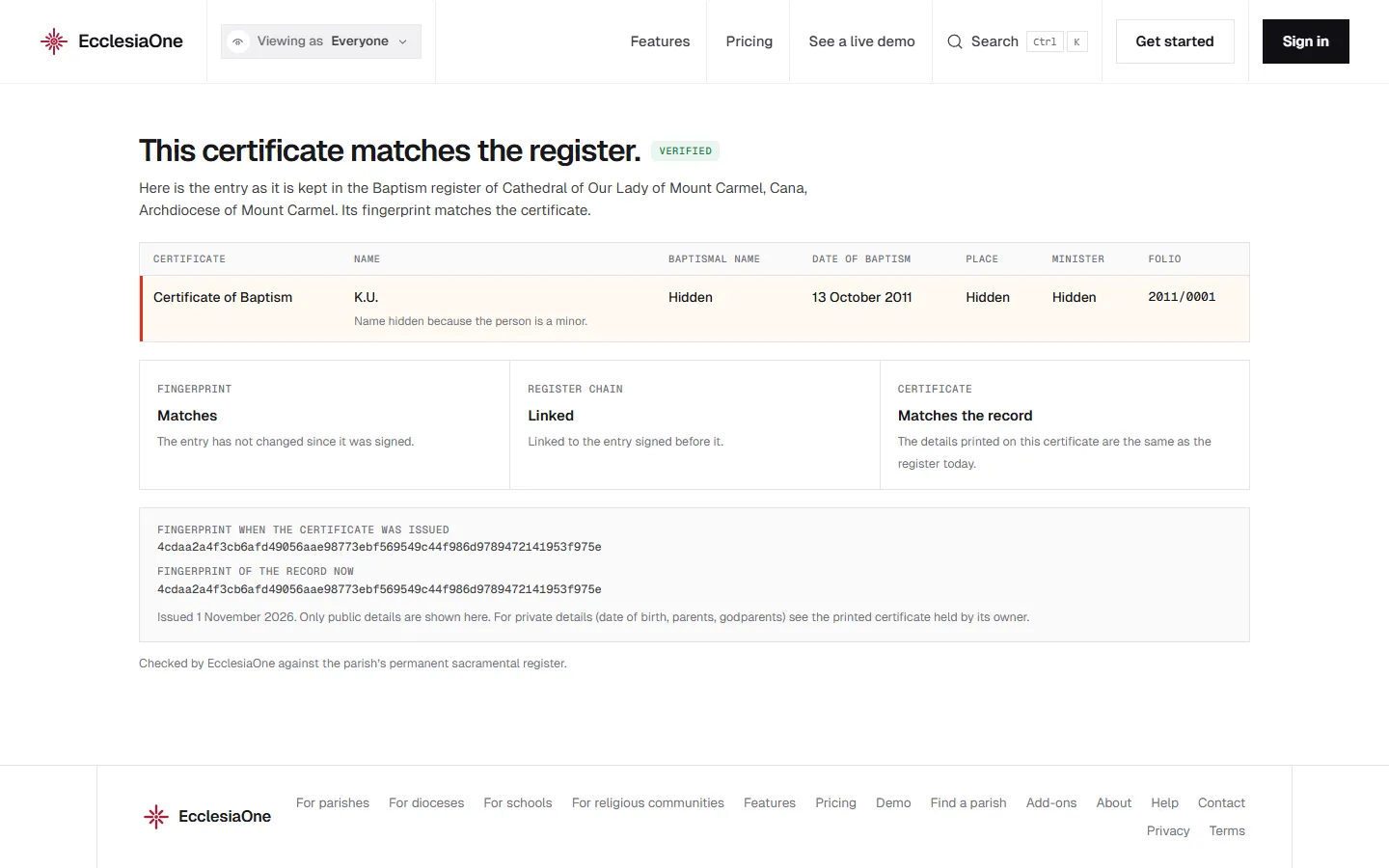
 Anselm's console · sample data
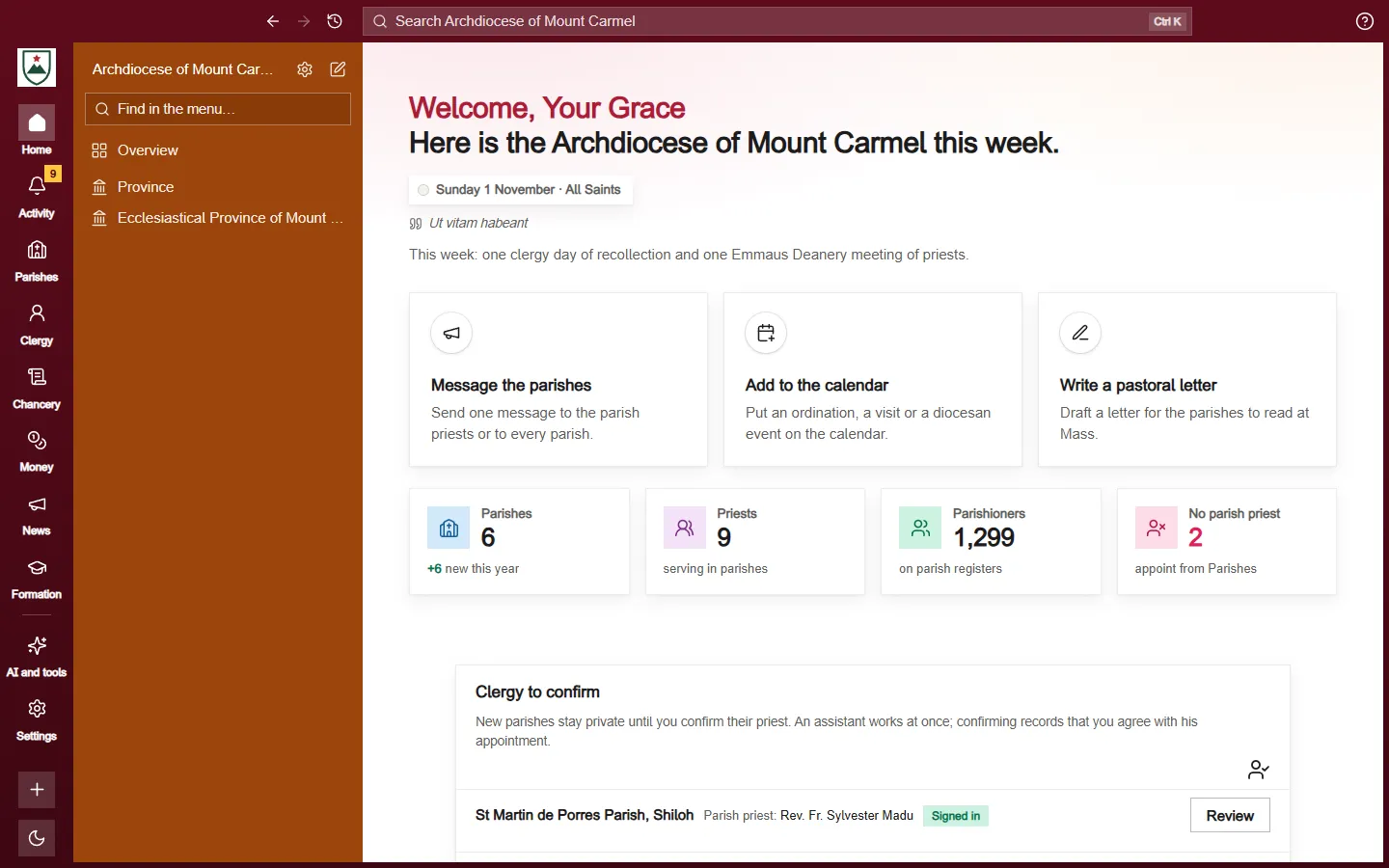
 Dominic's console · sample data
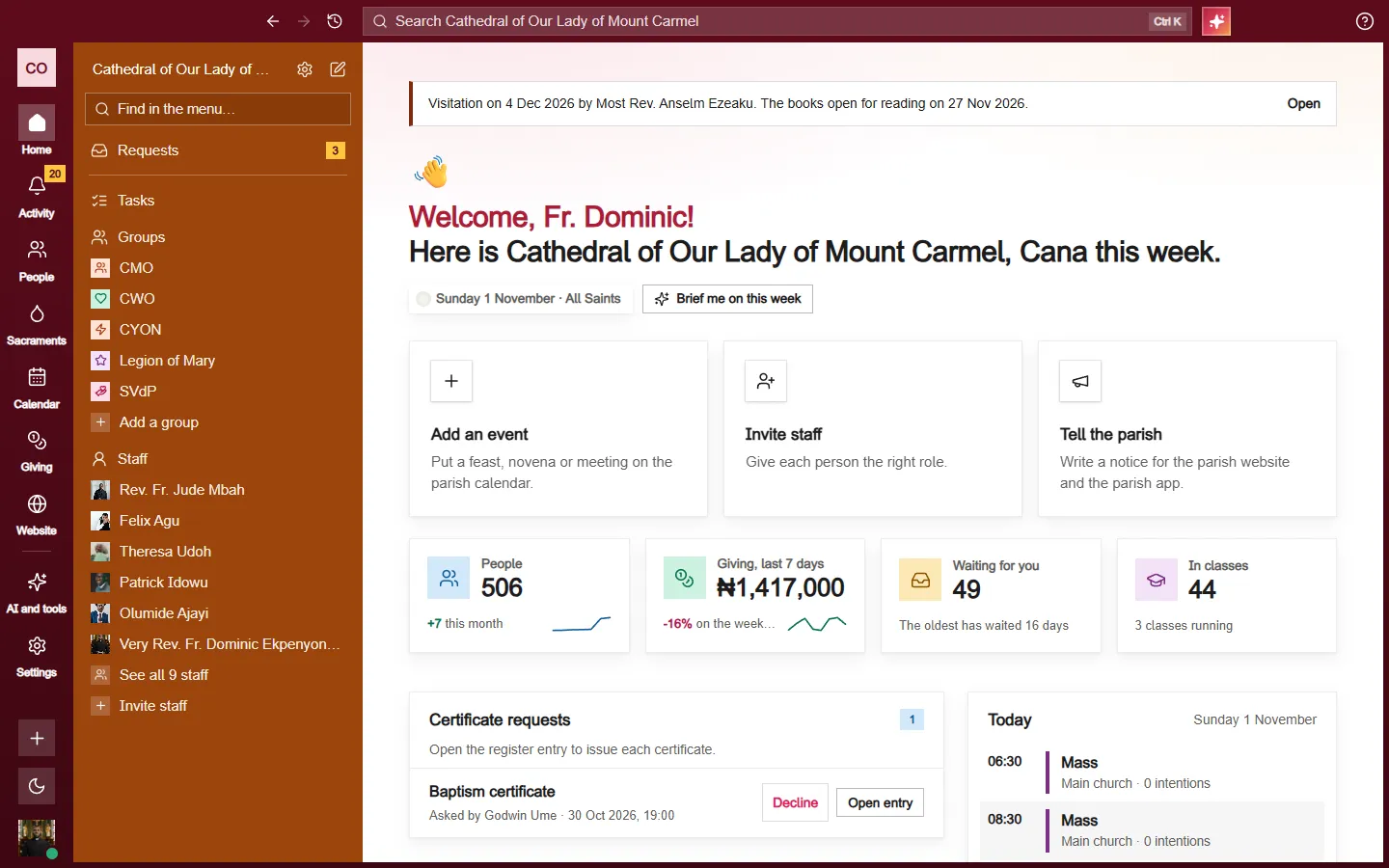
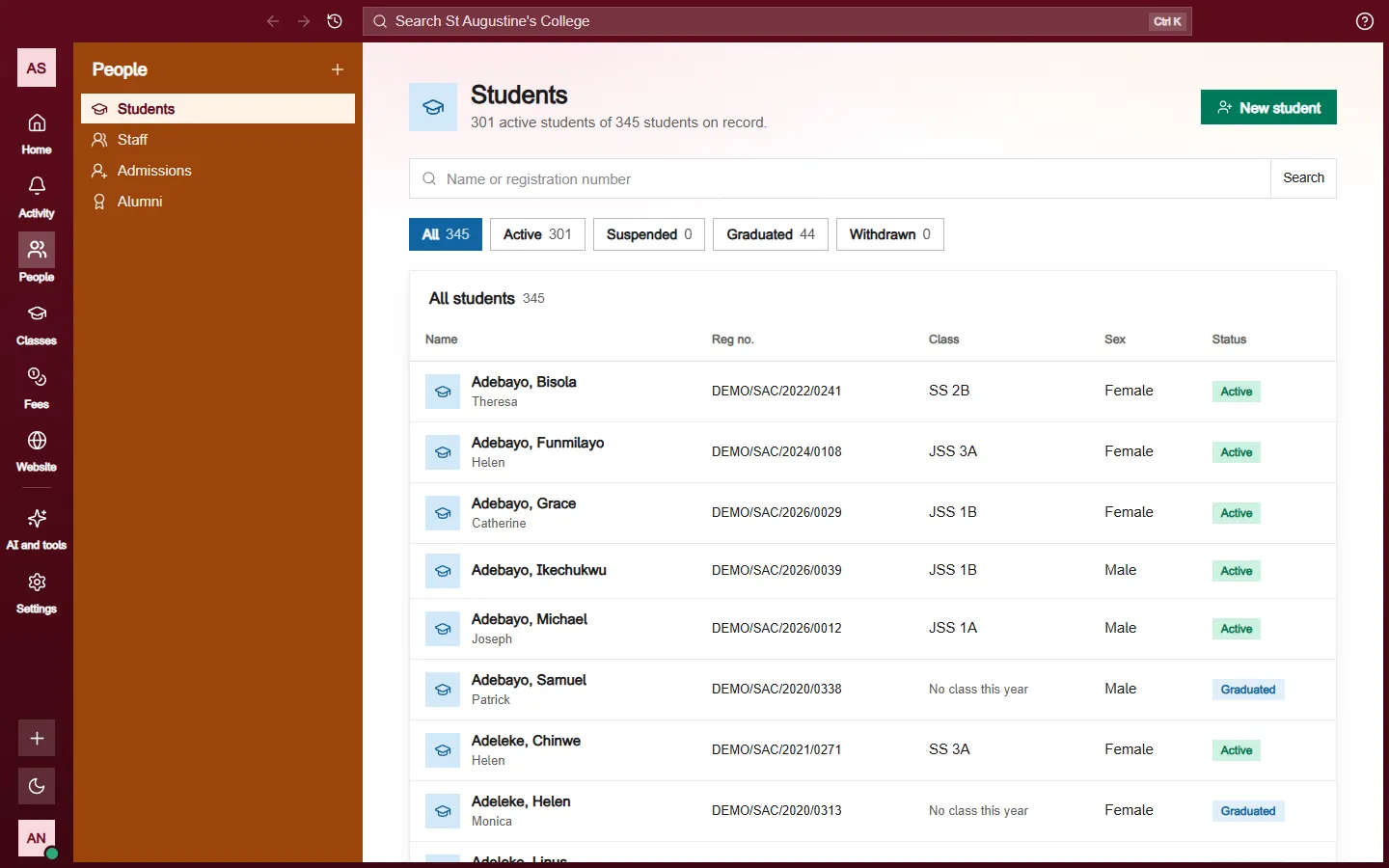
Safeguarding and child protection policy
Clearances, interaction logging, and reporting for the protection of minors.
- Version
- 2026.06.0
- Published
- 8 October 2026
- For
- Families
This policy explains how EcclesiaOne supports the protection of children and vulnerable people on the platform. It applies to everyone who uses features involving minors, including catechesis, youth activities, and schools. The platform is operated by Orravo Web Technologies. This policy works alongside the Children's Privacy Notice.
Safeguarding is primarily the responsibility of the dioceses, parishes, religious institutes, and schools that use the platform, and of the relevant Church and civil authorities. EcclesiaOne provides tools that support their safeguarding practice. This policy describes those tools and the responsibilities of users; it does not replace an institution's own safeguarding policy or the law.
Two things follow from that, and we want to be clear about both.
First, this policy does not set safeguarding standards. Each institution applies the safeguarding norms of its own diocese or religious institute and the child protection law of its own country, including the Child Rights Act where a Nigerian state has adopted it and any mandatory reporting duty that applies where the institution operates. Where an institution's own policy is stricter than what this document describes, the institution's policy governs.
Second, Orravo has not appointed a designated safeguarding lead, and it is not a safeguarding authority. We cannot receive, assess, or act on a report about a child. Reports go to your institution's own safeguarding officer and, where a child may be at risk of harm, to the civil authorities. What we can do is act on the platform: suspend an account, remove content, preserve records for an investigation, and give an institution or a lawful authority the information they are entitled to.
1.Clearance for adults who work with minors
Roles that bring an adult into contact with minors are flagged on the platform. Adults assigned to those roles must hold a current safeguarding clearance. Clearances have an expiry date. When a clearance lapses or is suspended, the platform restricts the adult's role so that the contact is interrupted until the clearance is renewed.
A clearance recorded on the platform reflects the checks the institution carried out. It is the institution's responsibility to carry out proper vetting; the platform records and enforces the status.
2.Logging of adult-minor interactions
The platform holds a safeguarding interaction log, built to record contact between adults and minors through the platform, such as group messages, emails, in-app notes, event actions, and gallery tagging. The log records who interacted with whom, through what channel, and an excerpt or reference to the content. It is processed as sensitive data under the Privacy Policy and is restricted to authorized safeguarding personnel.
We should not overstate this. The diocesan tools that write to and review that log are built but are not yet switched on, so an institution should not rely on it as a live safeguarding control today, and should keep whatever record its own policy requires. We will say here when that changes. Note also that entries in the log are deleted when the young person turns 18, together with the rest of their minor profile, so an institution that needs them beyond that point must export them first.
What is in force today, and does not depend on that log, is the clearance enforcement in section 1, the absence of any private one-to-one messaging feature, the initials-only public display of minors, and the event-scoped photo consent in section 3.
3.Protecting minors' visibility and images
Where the platform renders a minor's name on a public page, it shows initials only. Use of a minor's photograph depends on a consent recorded for that specific event rather than a blanket permission, and a guardian can ask for a photograph to be taken down. This is described further in the Children's Privacy Notice.
4.Reporting a concern
If you have a safeguarding concern about a child or vulnerable person, report it immediately to the relevant safeguarding officer in your diocese, parish, or school, and, where a child may be at risk of harm, to the appropriate civil authorities. Where the platform provides an incident-reporting tool, you can also record the concern there so that it is tracked.
If anyone is in immediate danger, contact the emergency services first.
5.Incident records
Safeguarding incidents recorded on the platform move through a defined workflow (for example reported, under review, investigating, referred, and closed). These records are sensitive and access is restricted to authorized personnel. They may be shared with Church authorities and civil authorities as required for the protection of those involved and as the law requires.
6.Confidentiality and data protection
Safeguarding information is handled with care and confidentiality, and is shared only with those who need it to protect people or to meet legal obligations. Handling this data is covered by the Privacy Policy and, for institutions, the Data Processing Agreement.
7.Misuse
Using the platform to harm, endanger, groom, or exploit a child or vulnerable person is a serious breach of the Acceptable Use Policy and the law. It can lead to immediate removal from the platform and referral to Church and civil authorities.
8.Contact
For a safeguarding concern about a child or vulnerable person, contact your institution's safeguarding officer, and the civil authorities where a child may be at risk. Do not send a report of that kind to Orravo, because we are not equipped to act on it and delay could matter.
For questions about this policy, about the platform's safeguarding tools, or to ask us to act on an account or a piece of content, contact [email protected].
A question about this document? Contact us.
A question about these?
Write to us and a person on our team will answer.