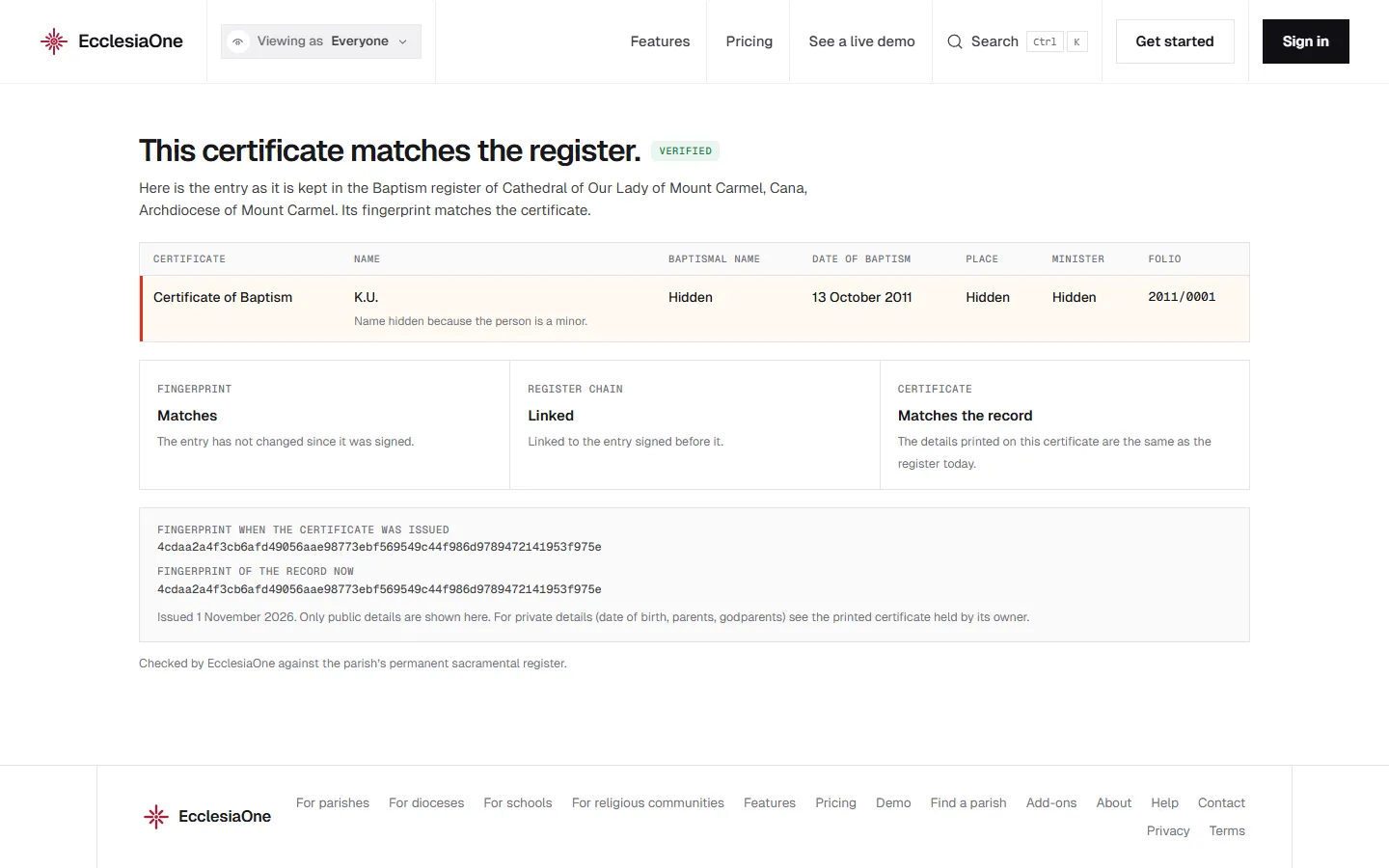
 Anselm's console · sample data
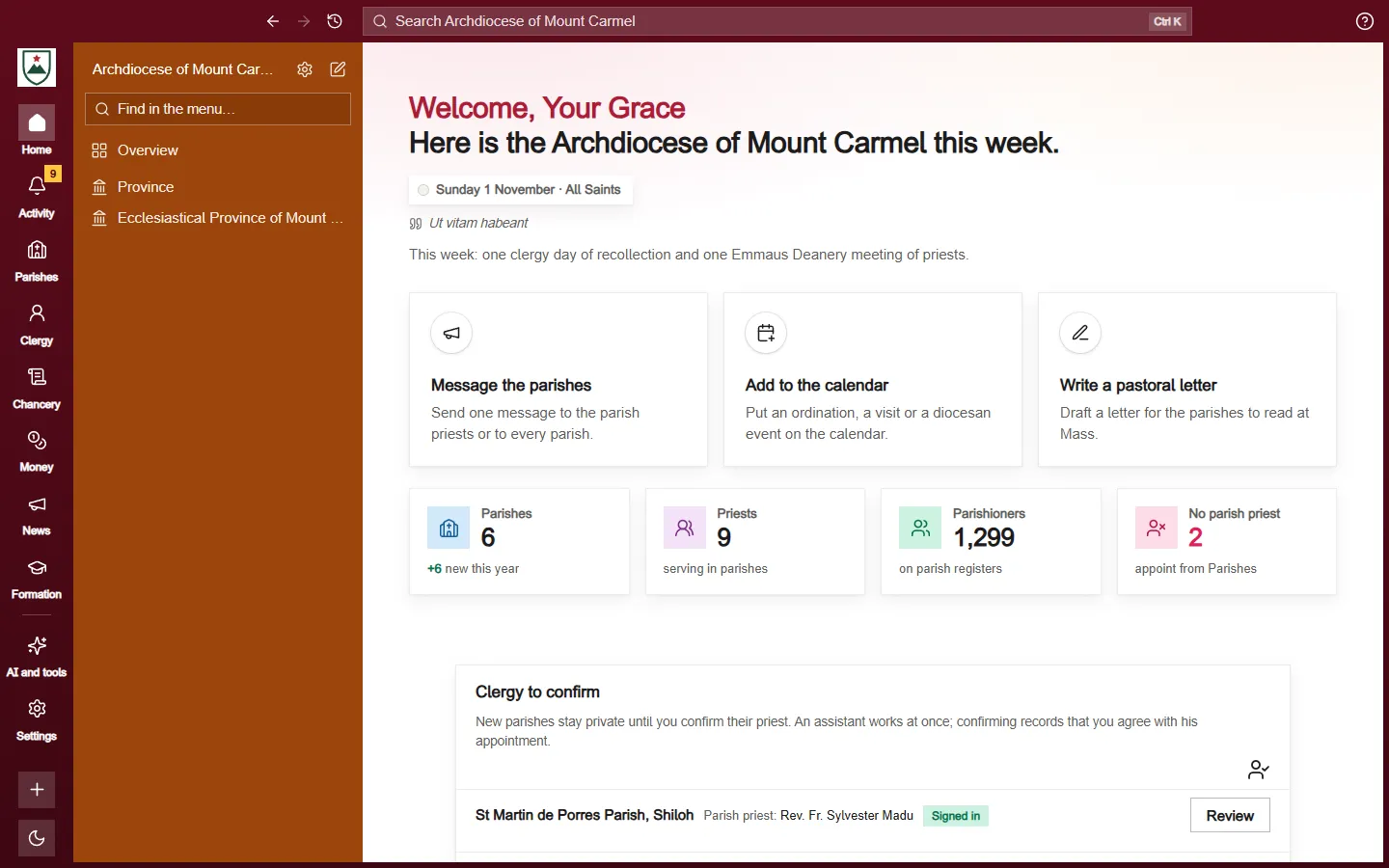
 Dominic's console · sample data
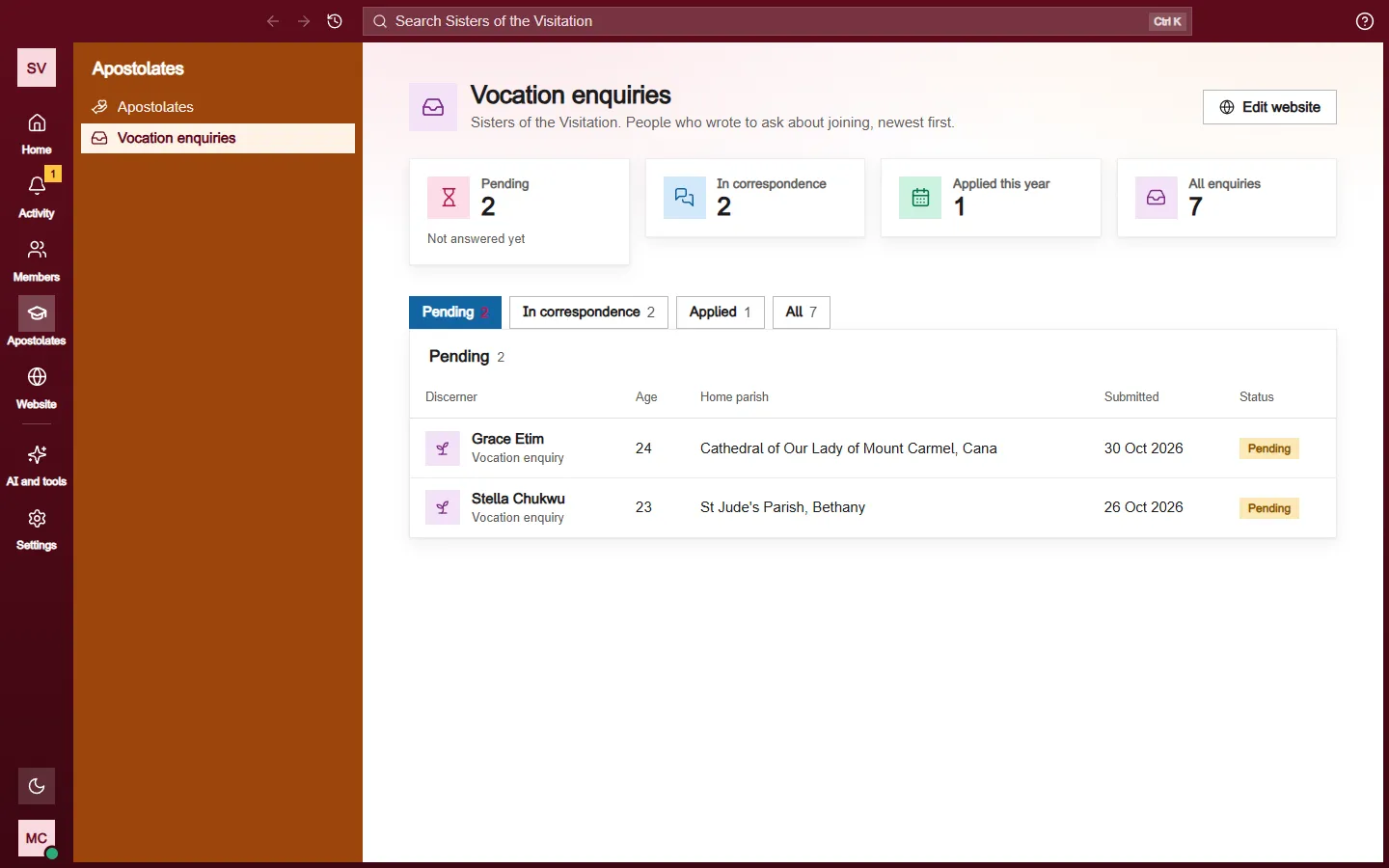
Houses, members and your own register.
Houses, members, the works you are asked to staff and the women who write to you.
Our team sets your community up with you. Every name and figure below is sample data.One register, kept by you. Every house with its kind, its town and its local superior. Every member with her stage, and her standing: active, on leave, left, or gone to God.
In the console: Houses and members, Settings
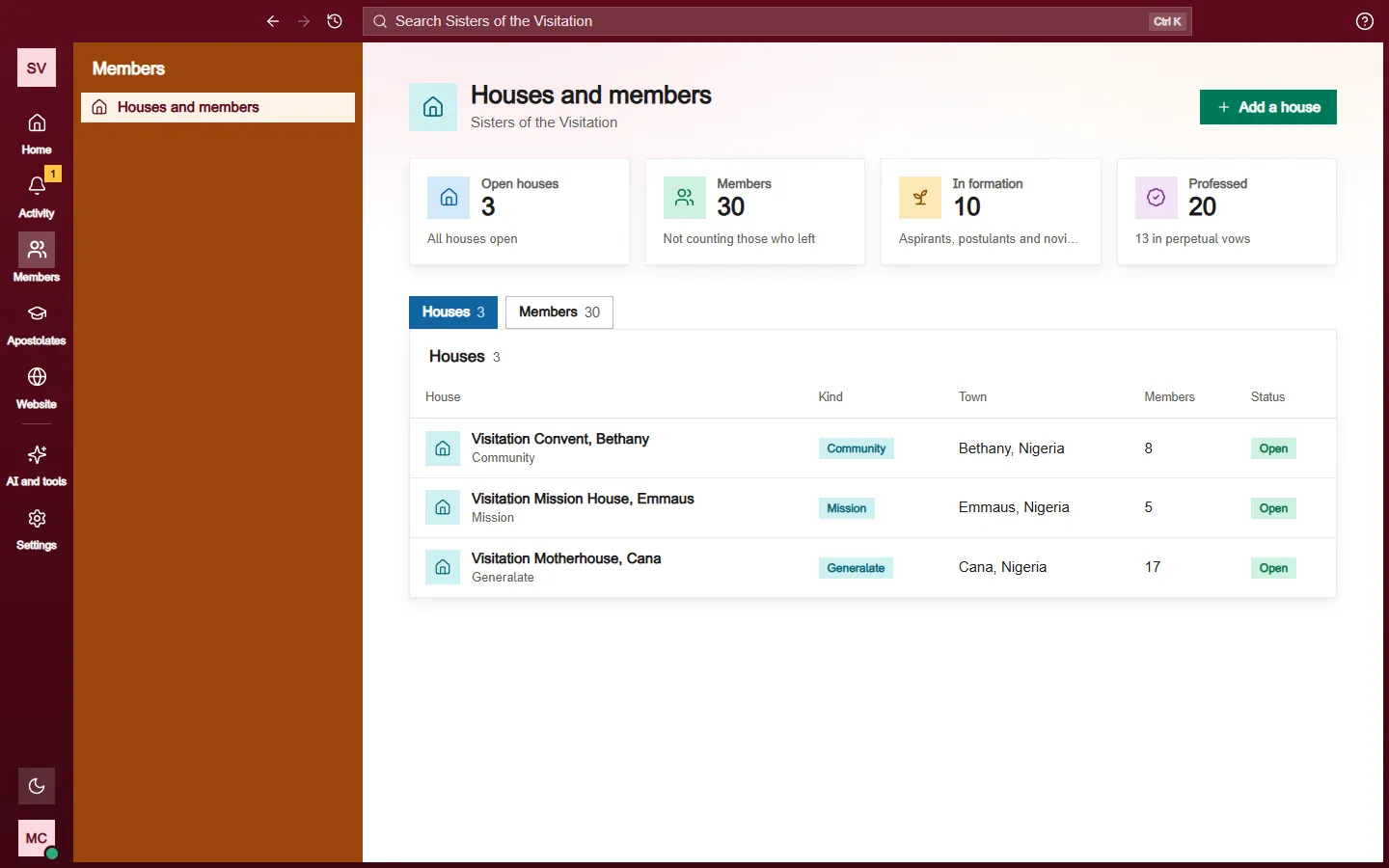
The houses, as you keep them.
A generalate, a novitiate, a mission, a retreat house: each with its town, its year and its local superior, and what shows on your pages.
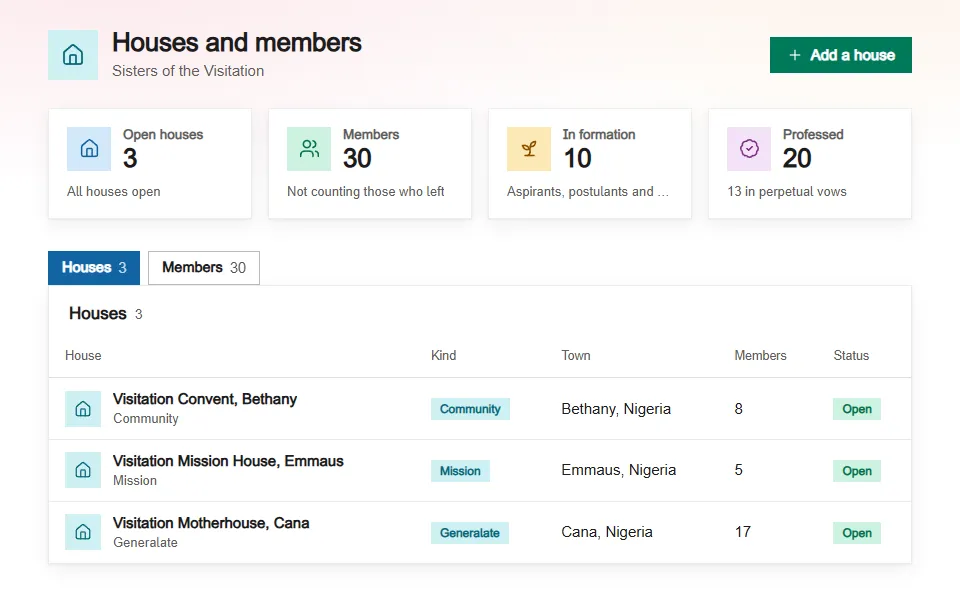
Counts by stage.
Counted as you receive and move your sisters. A sister who has left, or who has gone to God, is not counted among the living.
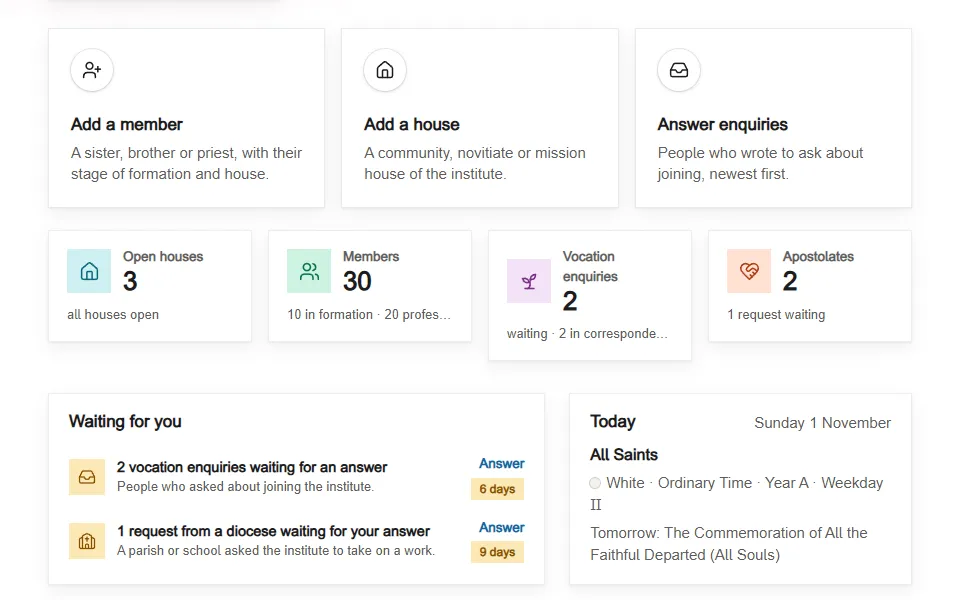
The diocese sees only counts. Its page on you: the houses in its own territory, how many sisters at each stage, how many enquiries are open, and who the Superior is.
In the console: Settings, Houses and members
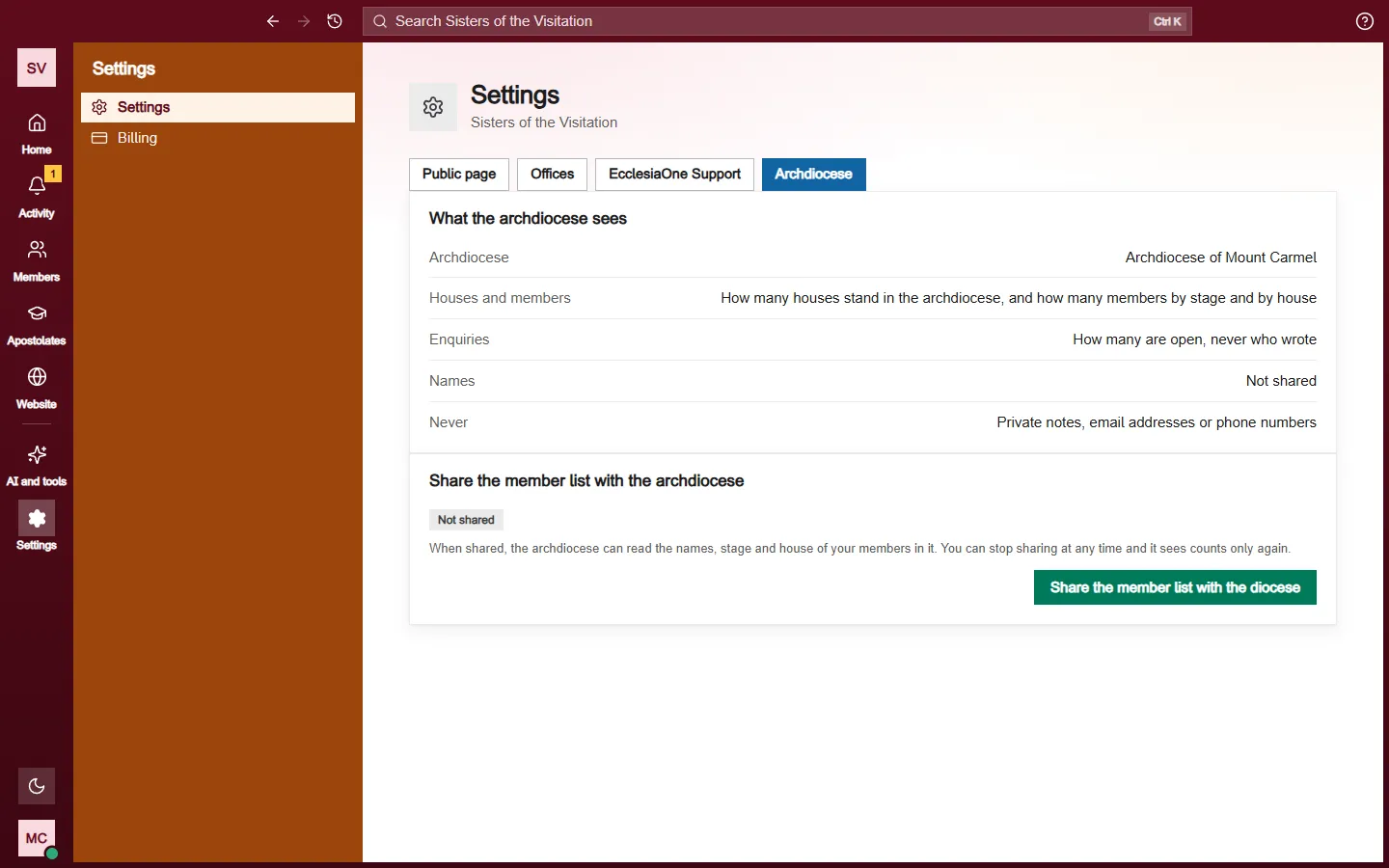
One switch shares the list.
Share the member list and the diocese sees the name, the stage and the house. Nothing else, and you can stop sharing.
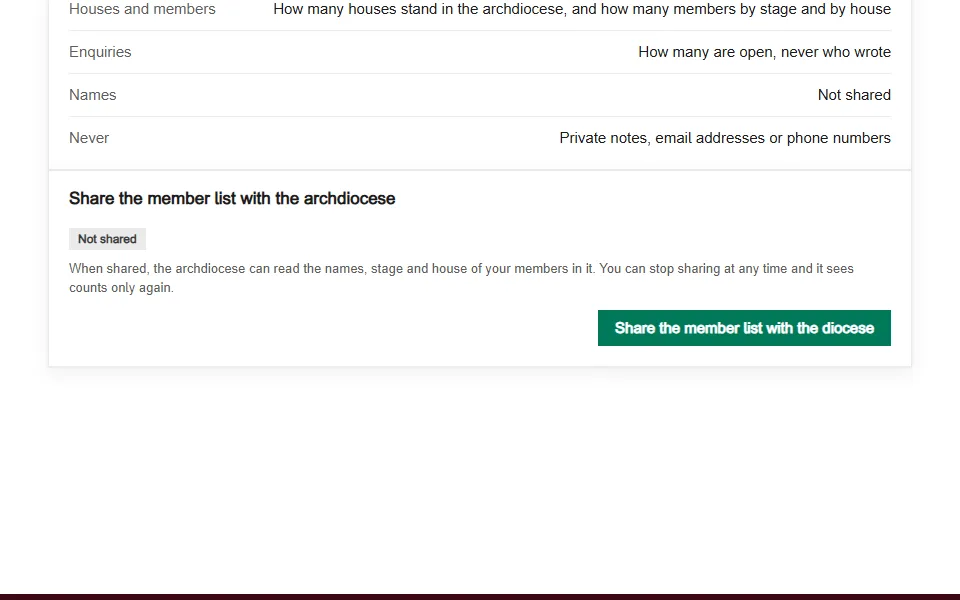
Your notes stay yours.
Only the Superior can read her notes on a sister; not even EcclesiaOne can.
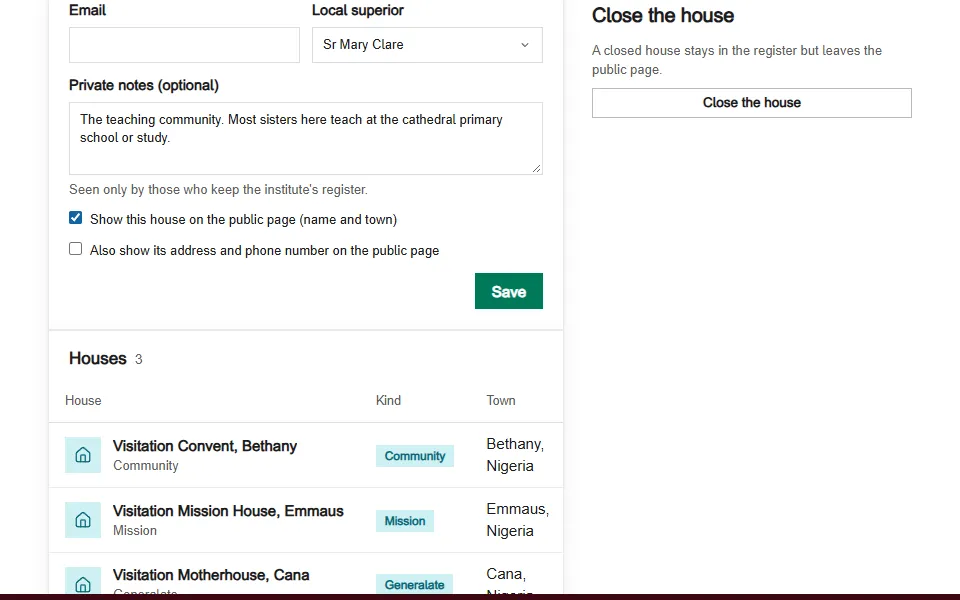
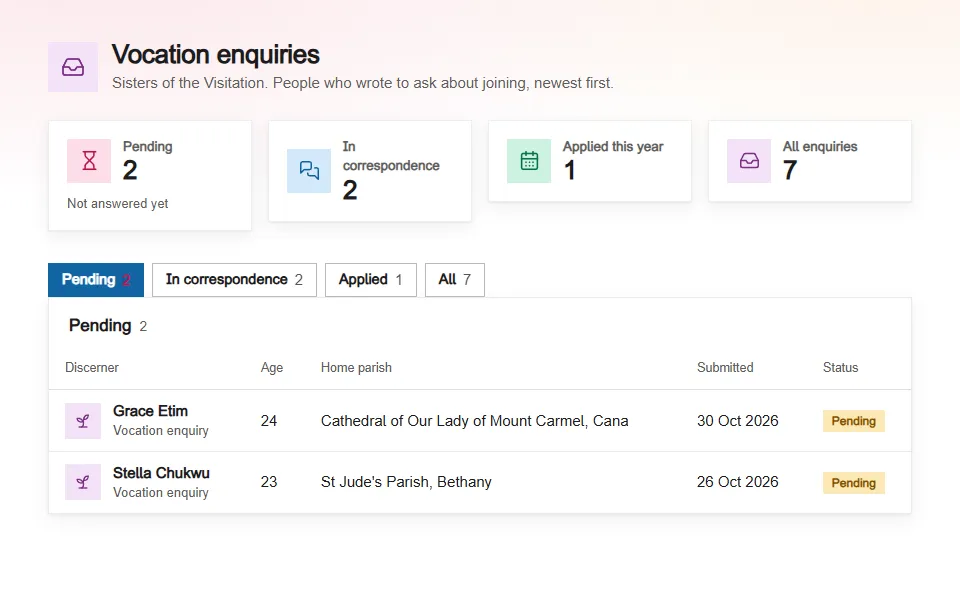
The young women who write to you. An enquiry arrives from the diocese's vocations page with her home parish, and moves from pending to in correspondence to applied as you answer it.
In the console: Vocation enquiries, Settings
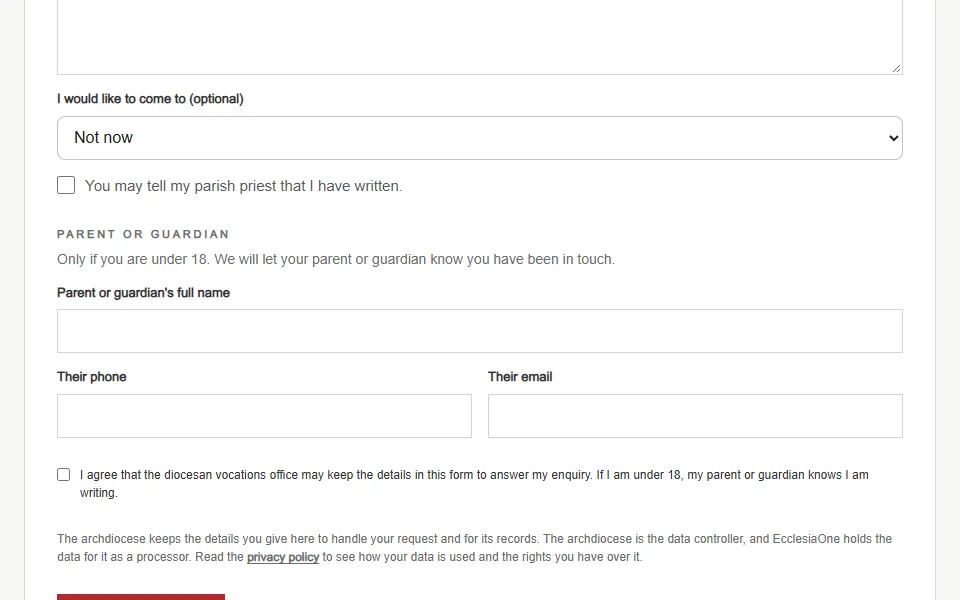
A come-and-see day she can choose.
The diocese lists its vocations days. An enquiry can name one of those days.
The vocations director sees enquiries.
She opens the enquiries and arranges the visits. The register and your notes stay with you.
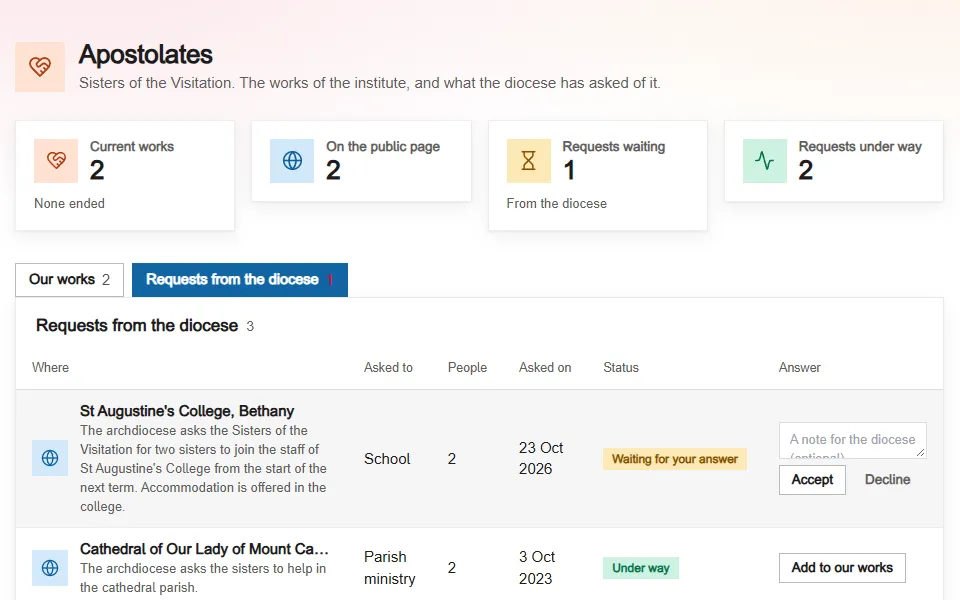
Your works, and what the diocese asks. Your own apostolates (a parish, a school, a chaplaincy, a clinic) and the diocese's request for sisters, accepted or declined here.
In the console: Apostolates, Houses and members
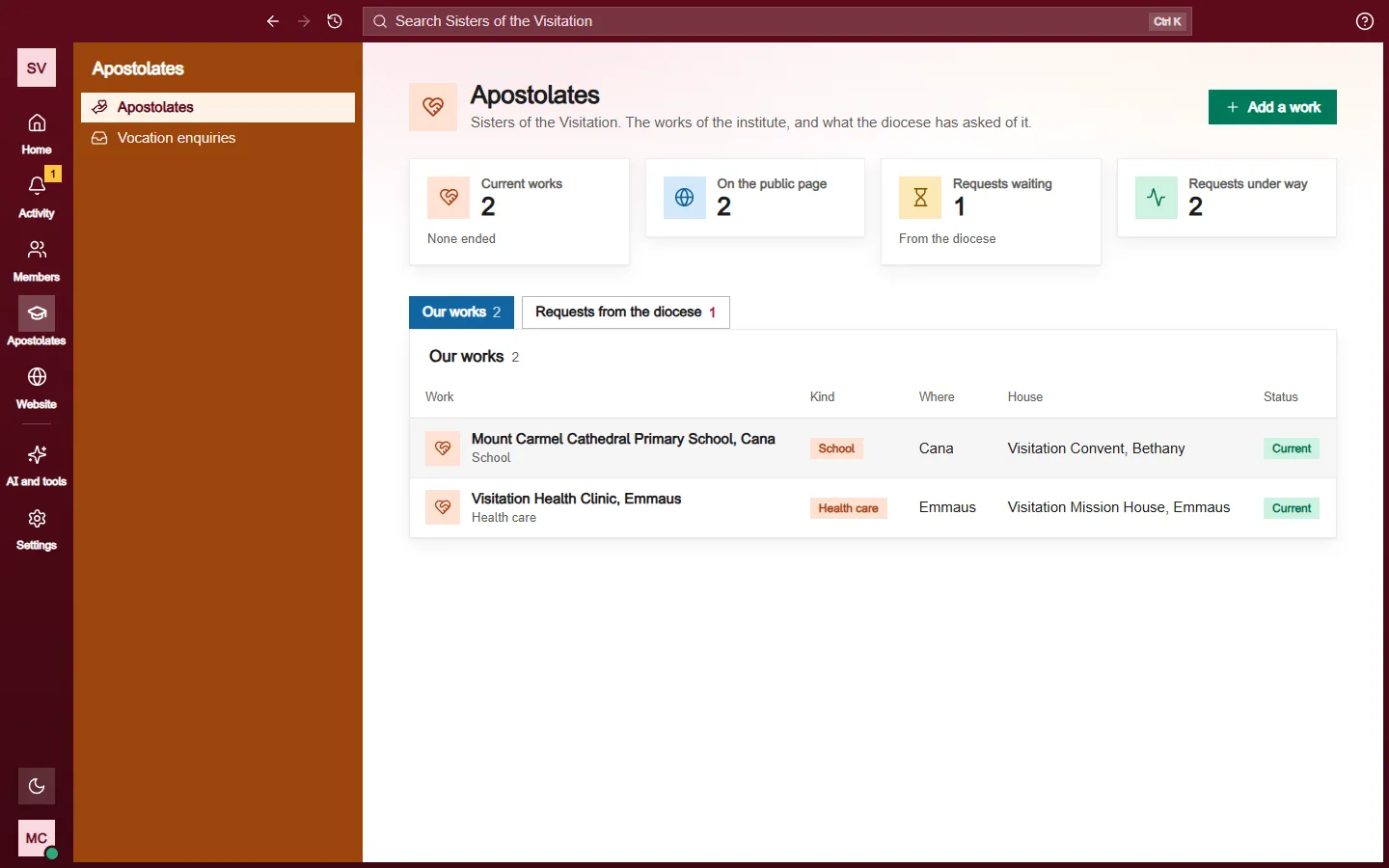
A work, with the house that keeps it.
Each work names its kind, its house and the year it began. Ending one keeps the record rather than rubbing it out.
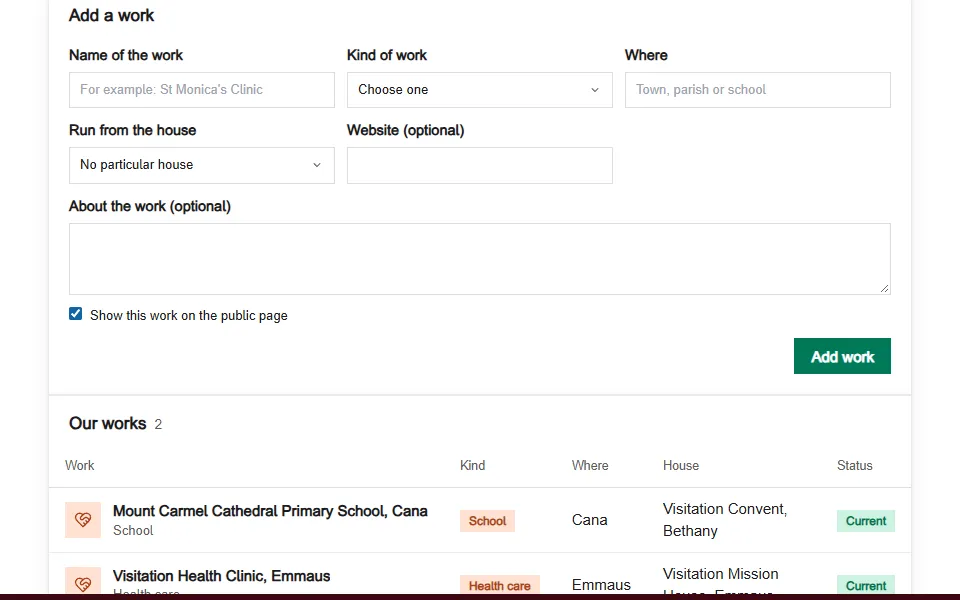
Declining is an answer too.
Decline with a reason and the diocese is told.
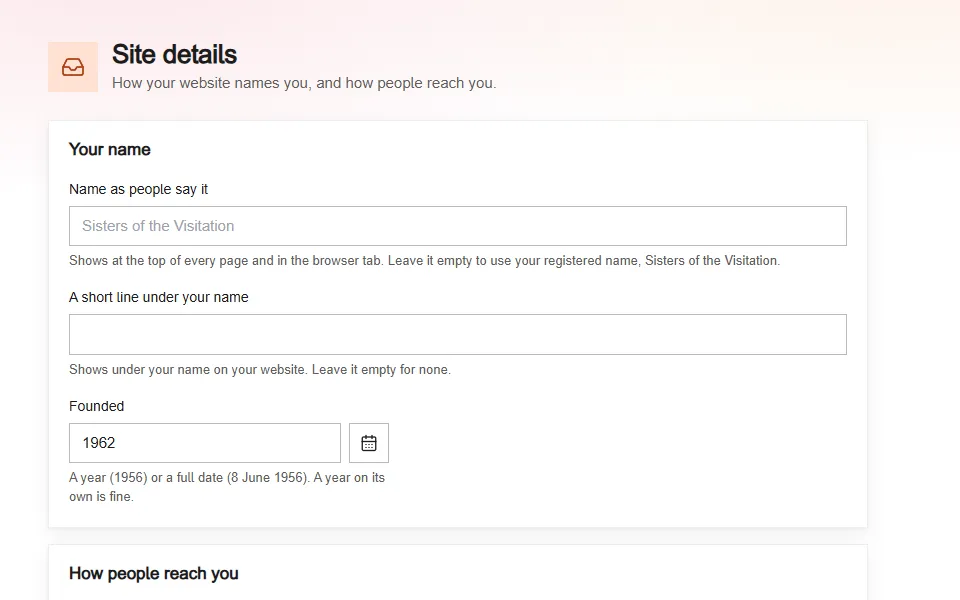
Your own page, and your own website. Charism, founder, houses, works, how to reach you, each yours to show or keep back, with the whole website behind it, at a web address you own.
In the console: Website, Settings
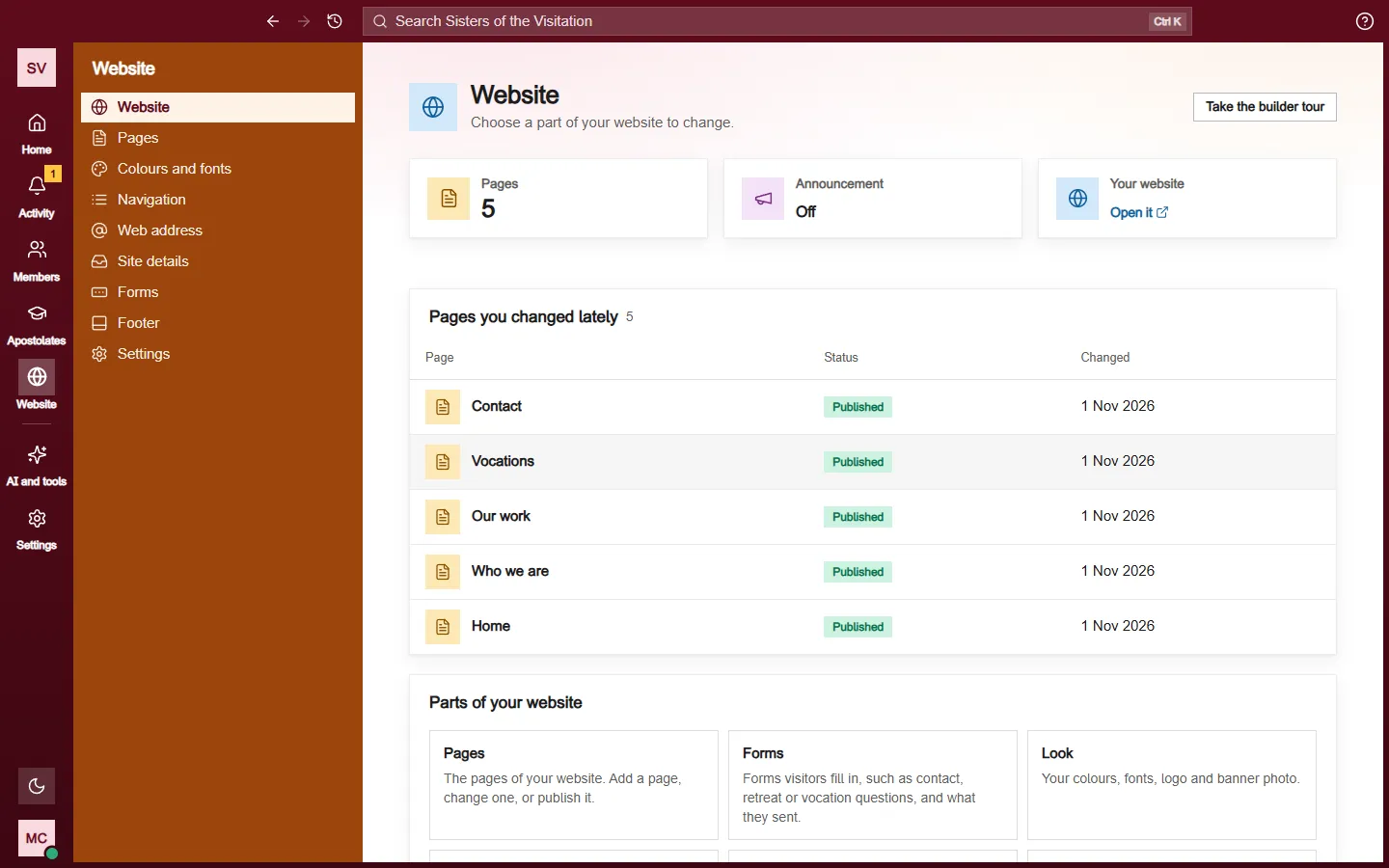
Show a section, or keep it back.
Choose which parts show on your page: houses, works, founder, vocations, how to reach you and how many you are.
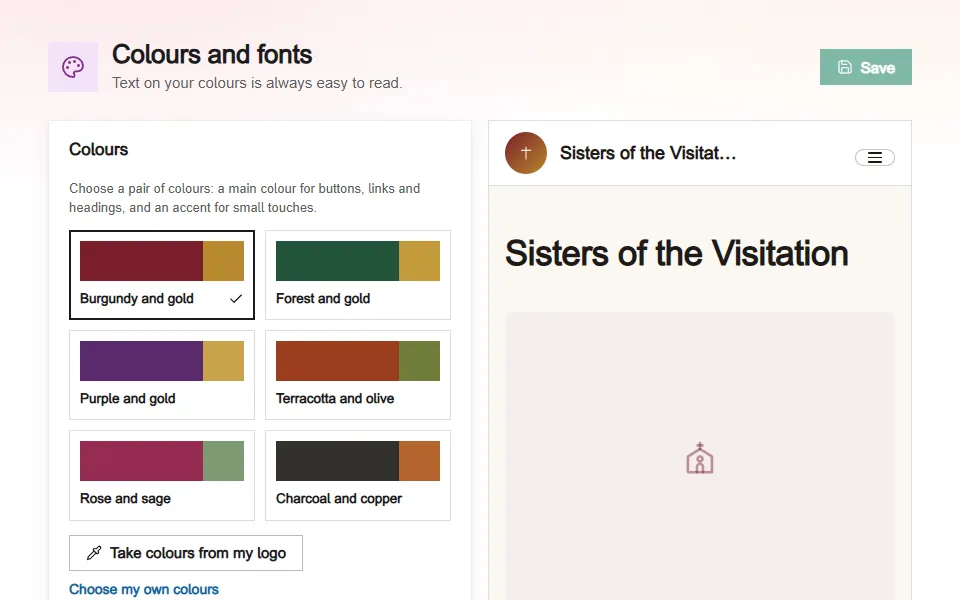
The look, in your own colour.
Choose the colours and the lettering. The preview shows what a visitor sees, before anything is published.
What stays with the congregation.
One subscription for the whole congregation.
One plan covers every house and sister. Essentials has the register, the works, the enquiries and your pages. Pro has no message limit and more storage. Monthly, or yearly at about 3% less.
- Houses and members, at every stage of formation
- Your notes, which nobody else can read
- Works, and the diocese's requests for sisters
- Vocation enquiries, and the offices you appoint
- Your public page and website, with a web address you own
- Four messages a month, and 2 GB for photographs and files
- Everything in Essentials
- Messages with no monthly limit
- Your own sections and the fuller looks for the website
- One web address included in the price
- 25 GB for photographs and files
Text messages are paid to your own provider, and a web address name is bought from a registrar. Our team sets the community up with you.
Questions a Superior asks.
The houses in its own territory, counts by stage, how many enquiries are open, and who the Superior is. Names only if you switch the member list on, and then only name, stage and house. Never your notes.
You do, once a Superior is in office. Before that the diocese keeps it. After that the diocese can no longer change your public page.
From the diocese's vocations page, where a young woman can name your congregation. It reaches your inbox with her home parish, the day she chose, and a guardian's name where she is young.
No. She opens the enquiries and arranges the visits. The register and the Superior's notes stay with the Superior.
Each diocese sees only the houses in its own territory, and the sisters in them. No diocese sees the whole congregation.
A sister can join the parish where her house stands, like any parishioner. Her account is her own, separate from the congregation's register.
Bring your community.
Our team sets it up with you. Open the sample congregation first and look around as its Superior.
Not a religious community? See the whole picture