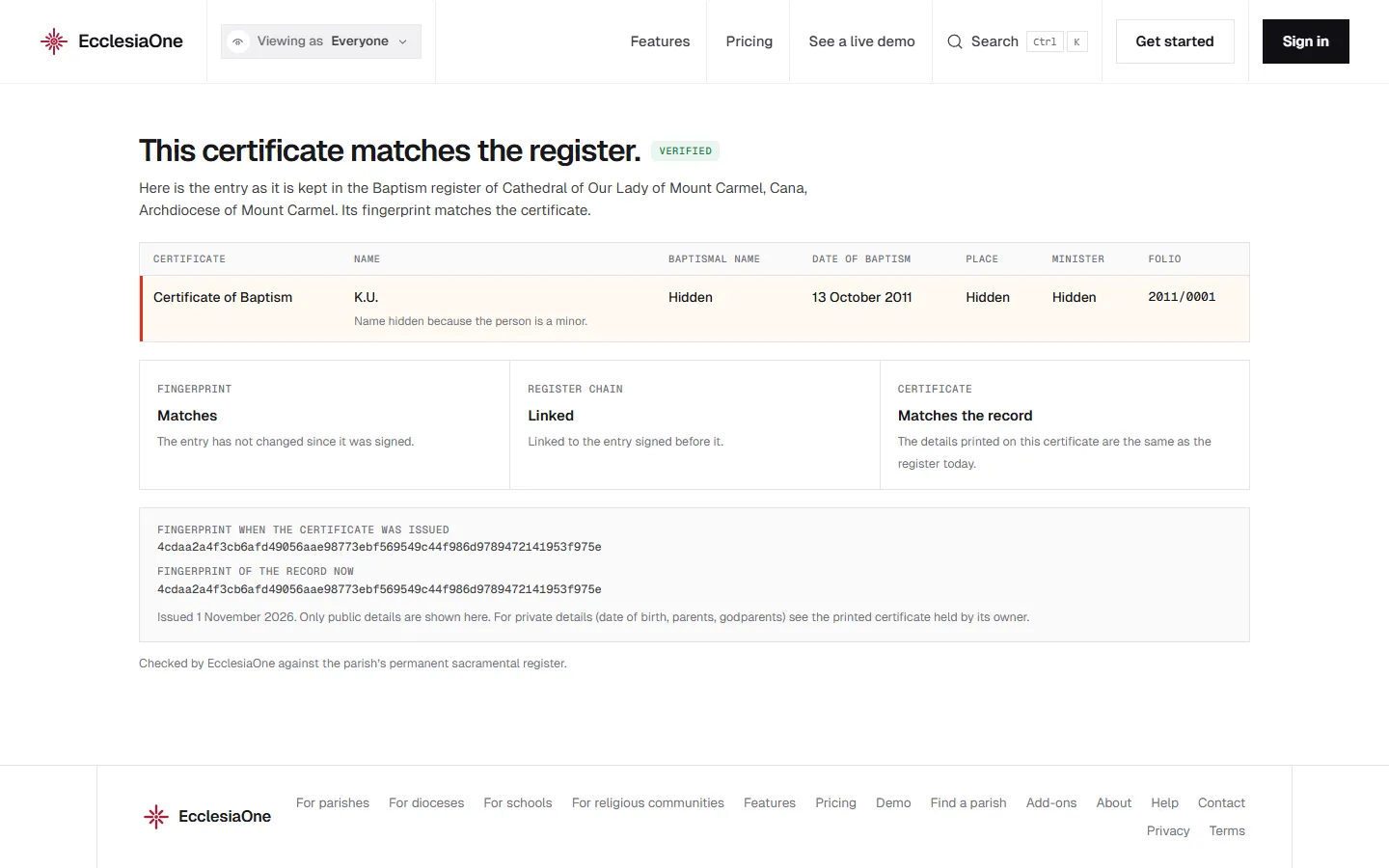
 Anselm's console · sample data
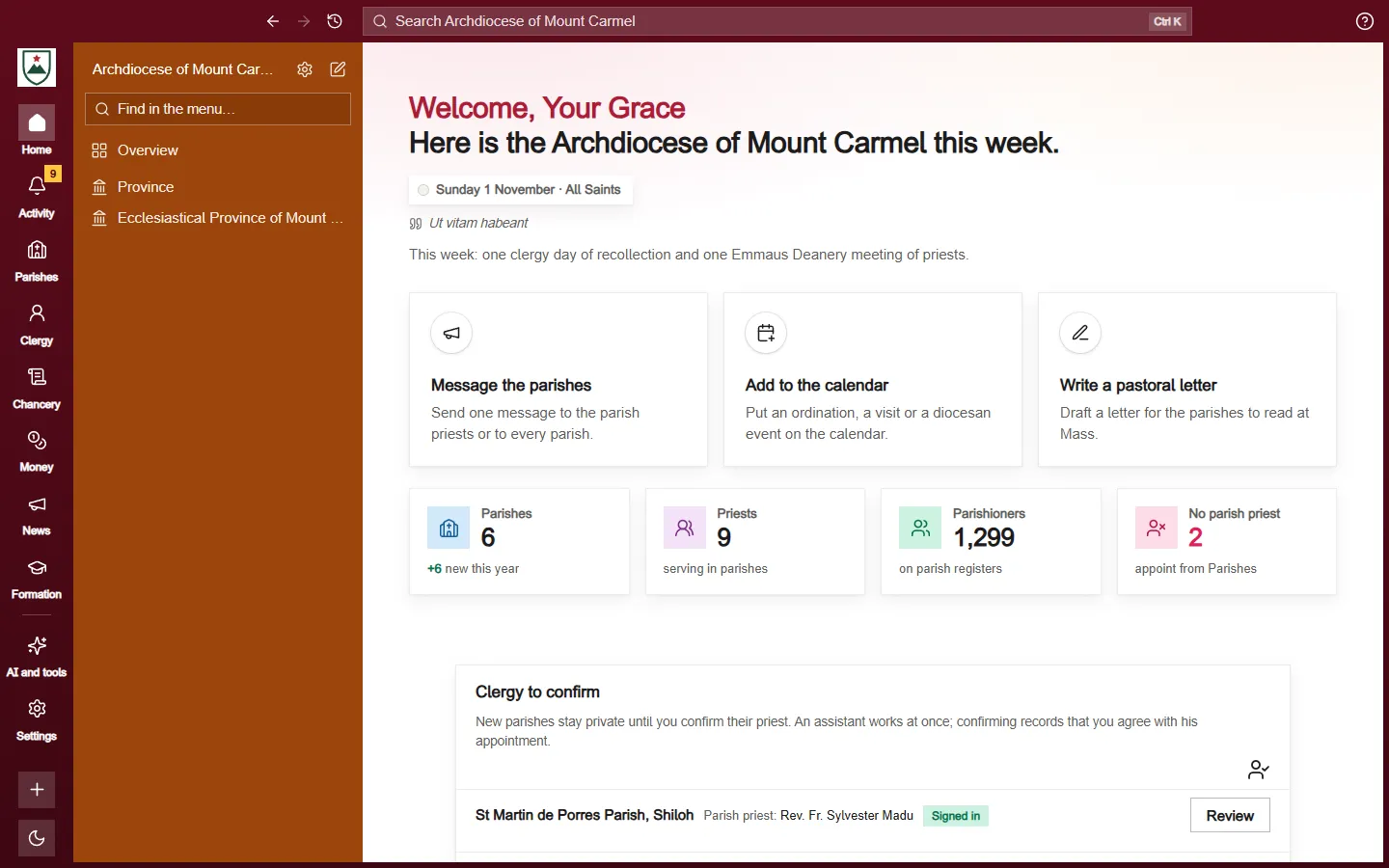
 Dominic's console · sample data
Donations and recurring giving terms
One-time and recurring gifts, receipts, tax letters, and refunds.
- Version
- 2026.06.0
- Published
- 8 October 2026
- For
- Families
These terms apply when you give through EcclesiaOne, whether a one-time gift or a recurring gift, and when you pay other amounts such as a pledge instalment. The platform is operated by Orravo Web Technologies. Read these terms with the Privacy Policy and the Terms of Service.
1.Who receives your gift
When you give through EcclesiaOne, your gift goes to the receiving institution you select, such as a parish, diocese, or society, and to the designation you choose (for example a collection, project, or general fund). Orravo operates the software that processes the gift. Orravo is not the recipient of your gift and is not a charity to which you are donating.
2.How payments are processed
Payments are handled by third-party payment processors, currently Paystack and Stripe, depending on what the receiving institution has set up. When you give, you are also subject to the processor's own terms. Your card or bank details are collected and secured by the processor. Orravo does not store your full card number. For recurring gifts, the processor may store a secure authorization token so that future gifts can be charged, and the platform may keep limited details such as the last four digits, card brand, and expiry date for display.
3.One-time gifts
A one-time gift is taken once, at the amount and in the currency you confirm at checkout. The default currency is the Nigerian Naira, and other currencies may be available where the institution has enabled them. Once a gift is completed, you receive a receipt.
4.Recurring gifts
A recurring gift is taken on a schedule you choose, such as weekly, fortnightly, monthly, quarterly, or annually, until you cancel it or it reaches an end date. By starting a recurring gift, you authorize the processor to charge the amount on that schedule.
You can cancel or pause a recurring gift through the platform. When you cancel, the platform asks the processor to stop the future charges and only records the gift as cancelled once the processor confirms that it has done so. If the processor does not confirm, the platform does not tell you the gift is cancelled. Pausing and resuming work the same way.
In a small number of cases the platform does not hold a usable subscription reference from the processor, usually because of how that recurring gift was first set up. When that happens, the platform will not pretend the cancellation succeeded. It tells you the request needs to be completed by hand and flags it for the receiving institution to action with the processor.
If a charge is taken after you cancelled, or if you were told a cancellation needs manual completion and you have not heard back, contact the receiving institution, or write to [email protected] and we will work with the institution and the processor to resolve it.
5.Receipts and tax letters
You receive a receipt for each completed gift. Where offered, you can request an annual tax letter that summarizes the gifts you made to an institution in a financial year. Receipts and tax letters are generated by the platform and can be verified. EcclesiaOne does not operate a Gift Aid or equivalent tax-reclaim scheme, and it does not claim tax relief on your behalf in any country. Whether a gift is tax deductible for you is a matter between you, the receiving institution, and your own tax authority.
6.Refunds
Gifts are voluntary donations to the receiving institution and are generally not refundable. A refund may be issued in limited cases, for example a duplicate or clearly mistaken gift, or where required by law. Refunds are decided by the receiving institution and processed back through the original payment method by the processor.
There is no fixed refund window and no automatic entitlement. Each request is considered on its own facts by the parish, diocese, or other institution that received the gift, so a refund request should go to that institution first. Ask as soon as you notice the problem: the older a payment is, the harder it is for the processor to reverse it. Where an institution agrees to a refund, the money is returned through the payment processor, and how long it takes to reach your account is set by the processor and your bank, not by us. We can help you reach the institution if you are not sure who to ask.
Refunds of recurring gifts already taken are handled the same way; cancelling a recurring gift stops future charges but does not by itself refund past gifts.
7.Failed and disputed payments
If a scheduled charge fails, the platform or processor may retry it. If you dispute a charge with your bank, the receiving institution and Orravo may receive information about the dispute from the processor in order to respond.
8.Your information
Information about your gifts is processed as described in the Privacy Policy. The receiving institution can see your giving history. You can choose, where the feature is offered, to give anonymously, in which case your identity is not attached to the gift record held by the institution, although the processor still holds the payment information.
9.Changes
We may update these terms. When we publish a new version, the version number and date on this page change.
10.Contact
For questions about a gift, contact the receiving institution, or write to [email protected].
A question about this document? Contact us.
A question about these?
Write to us and a person on our team will answer.