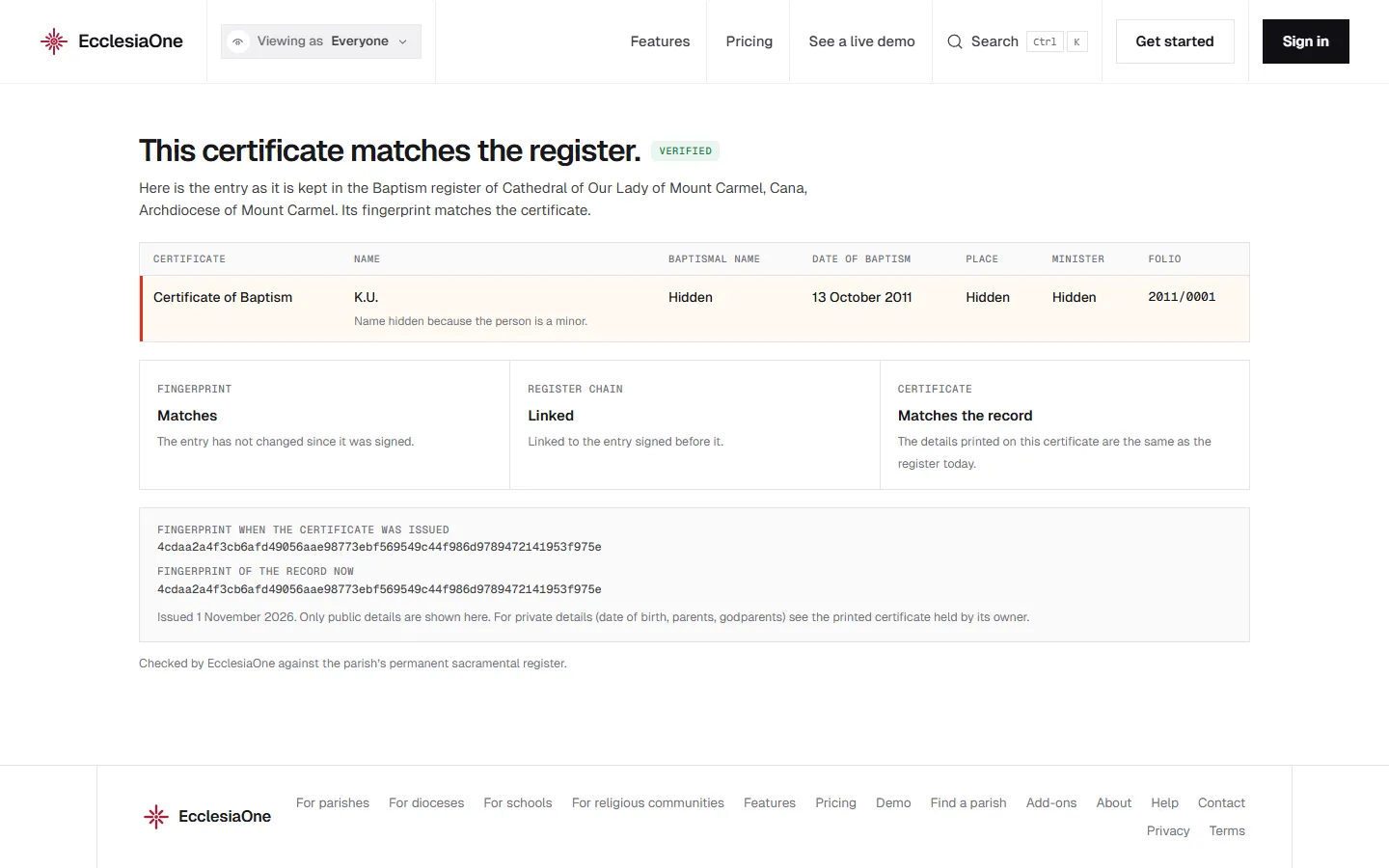
 Anselm's console · sample data
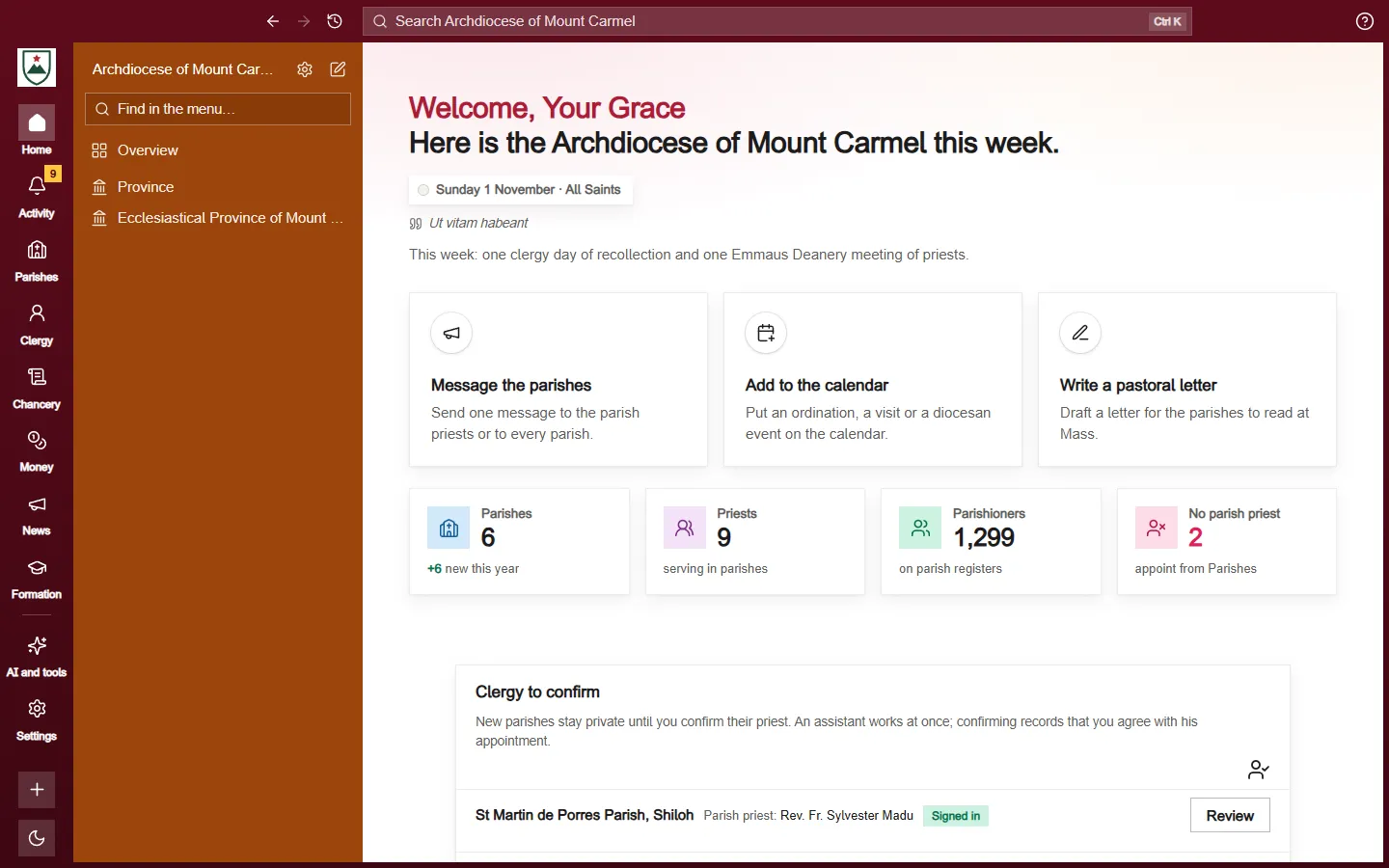
 Dominic's console · sample data
Communications consent
SMS, email, push, and WhatsApp messaging, preferences, and opt-out.
- Version
- 2026.06.0
- Published
- 8 October 2026
- For
- Everyone
Communications Consent and Preferences
This document explains the messages EcclesiaOne sends, how you control them, and when we may contact you even if you have opted out. The platform is operated by Orravo Web Technologies. Read this with the Privacy Policy.
1.The channels we use
EcclesiaOne can reach you through in-app notifications, email, SMS, push notifications on a mobile device, and, where enabled, WhatsApp. The channels used for a given message depend on the type of message and your preferences.
Messages are delivered through third-party providers. SMS is sent through providers such as Twilio, Termii, or Africa's Talking; email through providers such as Resend or Amazon SES; and push notifications through the relevant mobile push services. Your contact details are shared with these providers only to deliver the messages you are due to receive. They are listed in our Sub-processor List.
2.Types of message
Service and transactional messages relate to your account and your participation, such as sign-in and verification messages, receipts, reminders, and notices about changes to a record or to our policies. You receive these as part of using the platform.
Pastoral and community broadcasts are messages from your parish, diocese, or society, such as Mass schedules, announcements, and event information. These honour your preferences for each channel, except for the urgent category described in section 4.
Optional and marketing messages, if any are sent, require your consent, and you can withdraw that consent at any time.
3.Your preferences
You can set whether you receive email, SMS, and push messages, and you can adjust these in your account settings. For some broadcast levels you can choose to receive only in-app notifications and silence email at that level. Honouring these preferences applies to ordinary broadcasts and to optional messages.
You can turn a channel off at any time in your preferences, and the platform checks those preferences every time it sends a broadcast: email, SMS, WhatsApp, and push are each honoured separately, and a channel you have switched off is skipped.
Two limitations are worth stating plainly. Broadcast emails do not yet carry a one-click unsubscribe link in the message itself, and replying STOP to an SMS from the platform does not currently register an opt-out. Your preferences page is the place that works today. If you cannot reach it, or you want to be taken off a list altogether, write to [email protected] or ask your institution, and we will do it for you.
4.Urgent messages you cannot opt out of
A small category of urgent broadcasts at the diocese and parish level is treated as essential safety or pastoral communication. Messages in this category may be sent across multiple channels, including SMS and email, even if you have otherwise silenced those channels. This category is reserved for genuinely urgent matters and is subject to internal controls before it can be sent.
The boundary is firm: this category is never used for marketing, fundraising appeals, promotion, or anything an institution simply wants you to see. It is for safety and genuinely urgent pastoral matters, such as an emergency affecting a church or school, the death of a member of the clergy, or the cancellation of a service at short notice. We rely on the institution's legitimate interests for these messages and, where someone's life or safety is at stake, on vital interests. The lawful bases for all our processing are set out in the Privacy Policy.
If you believe an institution has used this category for something that was not urgent, tell us at [email protected]. Misuse of it is a breach of the Acceptable Use Policy.
5.How recipients are chosen
A broadcast reaches only the people within the sender's scope. A parish broadcast reaches that parish's members, a diocese broadcast reaches the diocese, and a society broadcast reaches that society. Senders cannot use the platform to message people outside their scope.
6.Delivery records
We keep records of the messages sent to you, including delivery status, so that we can confirm delivery, retry failures, and investigate problems. These records are processed as described in the Privacy Policy.
7.Costs
SMS and some other channels cost the sending institution money per message. This does not change your rights to control or opt out of non-urgent messages.
8.Changes
We may update this document. When we publish a new version, the version number and date on this page change.
9.Contact
For questions about communications, contact your institution, or Orravo at [email protected].
A question about this document? Contact us.
A question about these?
Write to us and a person on our team will answer.