 Anselm's console · sample data
 Dominic's console · sample data
Children's privacy notice
How minors' data is handled across catechesis and the schools suite.
- Version
- 2026.06.0
- Published
- 8 October 2026
- For
- Families
This notice explains how EcclesiaOne handles the personal data of children. It is for parents, legal guardians, and the institutions that run catechesis and schools on the platform. It adds detail to our main Privacy Policy and should be read with it. EcclesiaOne is operated by Orravo Web Technologies.
In this notice, a "child" or "minor" is a person under the age of 18.
1.When the platform holds children's data
EcclesiaOne processes children's data only where an institution uses features that involve minors, such as sacrament preparation and catechesis, parish youth activities, and the schools suite. The institution (the parish, diocese, religious institute, or school) is the data controller for these records and decides what to record and why. Orravo processes the data on the institution's instructions.
2.Parental and guardian consent
A minor takes part through the supervised catechesis and school structure, not on their own. A parent or legal guardian sets up and controls a minor's participation, and the record the platform creates for a child cannot be signed into: there is no password a child can use. Children should not use the public sign-up form, and an institution that finds an account was opened by a child should tell us so that it can be removed or placed under a guardian.
The platform records consent from the parent or guardian for specific purposes, which may include:
- membership of the platform;
- enrolment in catechesis or a sacrament-preparation programme;
- enrolment in a school;
- participation in events, retreats, and overnight trips;
- use of photographs and video;
- medical release for activities;
- communication from a catechist; and
- where permitted, supervised participation in a youth forum space.
Each consent records who gave it, when, what it covers, and when it expires or is withdrawn. It also records a fingerprint of the exact wording that was accepted, so that we can show later what was agreed to.
A guardian can withdraw a consent at any time, which stops the corresponding processing going forward. For photographs, the guardian can do this themselves from the household area of their account, per event. For every other consent, ask the institution that holds the records, or us, and we will act on the request.
The age we apply. EcclesiaOne applies a single threshold of 18. Everyone under 18 is treated as a minor, and a parent or guardian gives consent on their behalf, whatever their age. We do not operate a lower age of digital consent, and we do not vary the age by country. This is stricter than the age at which the Nigeria Data Protection Act and the GDPR would each allow a young person to consent for themselves, and we have chosen it deliberately so that there is one rule across every diocese and school on the platform.
Within that single threshold, the platform separates minors into two groups, under 13 and 13 to 17, and allows a slightly wider set of contact channels for the older group. Neither group consents for itself.
3.What data is held about a child
Depending on the features used, this may include the child's name and baptismal name, date of birth, sex as recorded for canonical purposes, photographs, parent and guardian contact details, sacrament-preparation and catechesis records, school enrolment, attendance, grades, discipline records, and consents. For schools, it may also include fee assignments and payments.
4.Protecting children on the platform
The platform applies extra protections for minors:
- Limited public display. Where the platform renders a minor's name on a public page, it shows initials only. Minors are not openly listed by name.
- No private messaging. EcclesiaOne has no one-to-one private messaging feature at all, for anyone. Contact with a child goes through group messages, event responses, catechist communications, and the parish's own email and SMS broadcasts, all of which are visible to the institution.
- Photo consent and takedown. Use of a child's photograph depends on a consent recorded for that specific event, not a blanket permission, and a guardian can ask from within their account for a photograph to be taken down.
- Safeguarding clearances. Adults whose roles bring them into contact with minors must hold a current safeguarding clearance. A clearance is valid for 12 months from the date the training was completed, the holder is warned 30 days before it expires, and when it lapses the platform automatically expires the roles and school-staff assignments that involve contact with children.
The platform also holds a safeguarding interaction log, designed to record contact between adults and minors for later review. The diocesan tools that write to and review that log are built but are not yet switched on, so we do not claim it as a protection that is operating today. Where it does hold entries, they are deleted when the young person turns 18, together with the rest of their minor profile, so an institution that needs them to survive that point should export them first.
These measures are described further in our Safeguarding Policy.
5.Special protection when a minor reaches adulthood
When a person who was a minor on the platform reaches 18, they can ask for childhood content that is not part of the permanent canonical record to be removed. The request is made from the data and privacy area of their own account.
The removal covers their forum topics and replies, their prayer-wall entries, and the delivery records of messages sent to them, including the content of those messages. It is carried out on the next nightly run, it is permanent, and it can only be done once.
Photographs are not covered. The platform cannot presently identify which photographs a particular person appears in, so it cannot remove them automatically. A guardian, or the person themselves once they are 18, can ask the institution to take down a specific photograph, and there is a takedown control in the household area for photographs linked to an event.
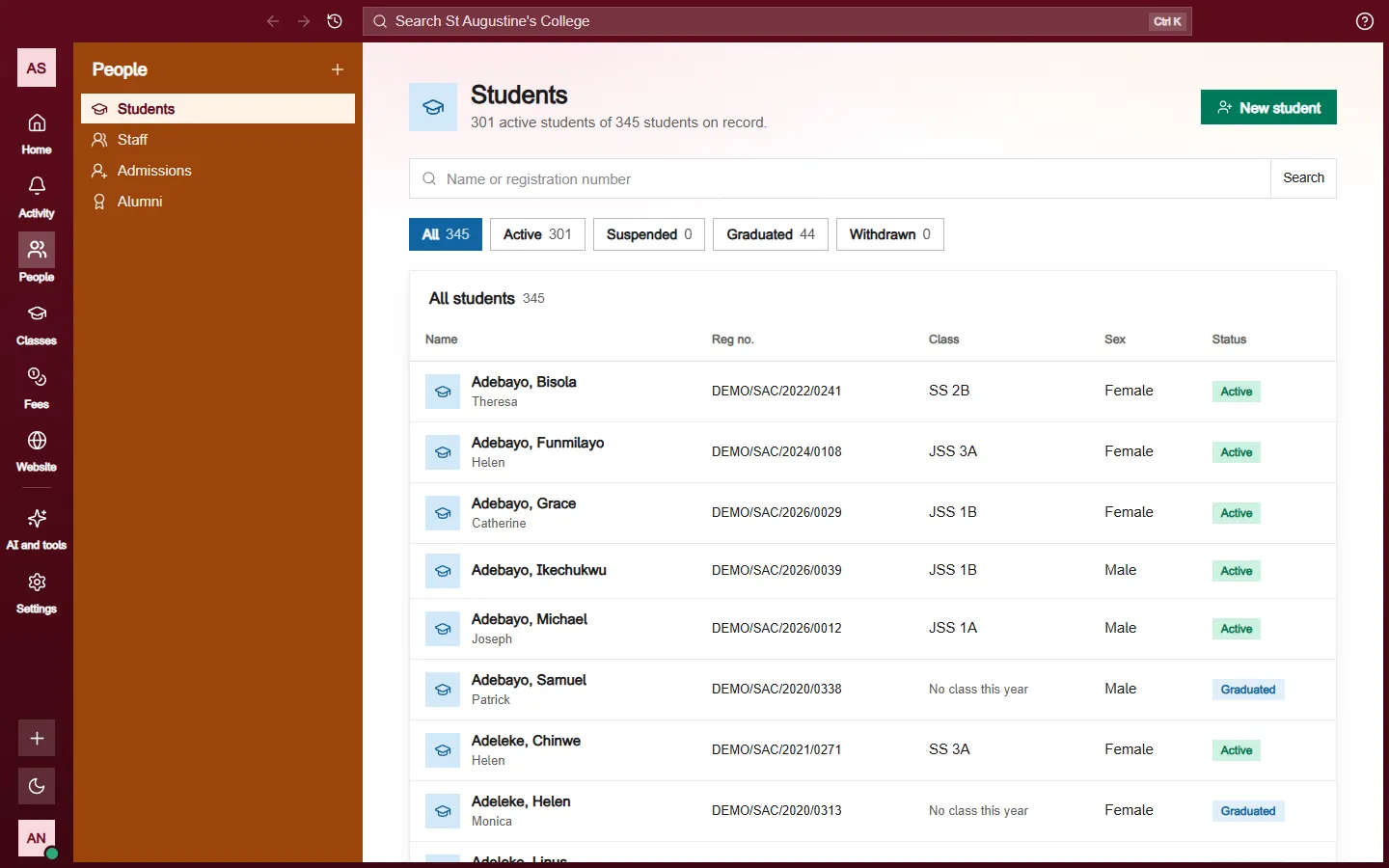
Sacramental records are preserved as part of the Church's permanent register and are not removed by this process. Where those records are shown publicly, the name is masked.
There is no deadline. The right is available from the person's eighteenth birthday onwards, for as long as their account exists.
6.Sharing
Children's data is shared only as described in the Privacy Policy: within the institution and the Church structure it belongs to, with the service providers that help run the platform, with Orravo staff where strictly necessary, where the law requires it, and to protect a child in a safeguarding situation. We do not use children's data for marketing and we do not sell it.
7.Rights
A parent or guardian can exercise the data-protection rights set out in the Privacy Policy on behalf of a child, including access, correction, and (subject to the canonical-record limits) erasure. As the child matures, those rights pass to the child in line with applicable law. Contact the institution that controls the records, or Orravo at [email protected] if you are unsure who to ask.
8.Contact
For questions about children's data, contact the relevant institution, or Orravo at [email protected]. We have not appointed a Data Protection Officer. Data-protection enquiries are handled by the company and should be sent to that address.
A question about this document? Contact us.
A question about these?
Write to us and a person on our team will answer.