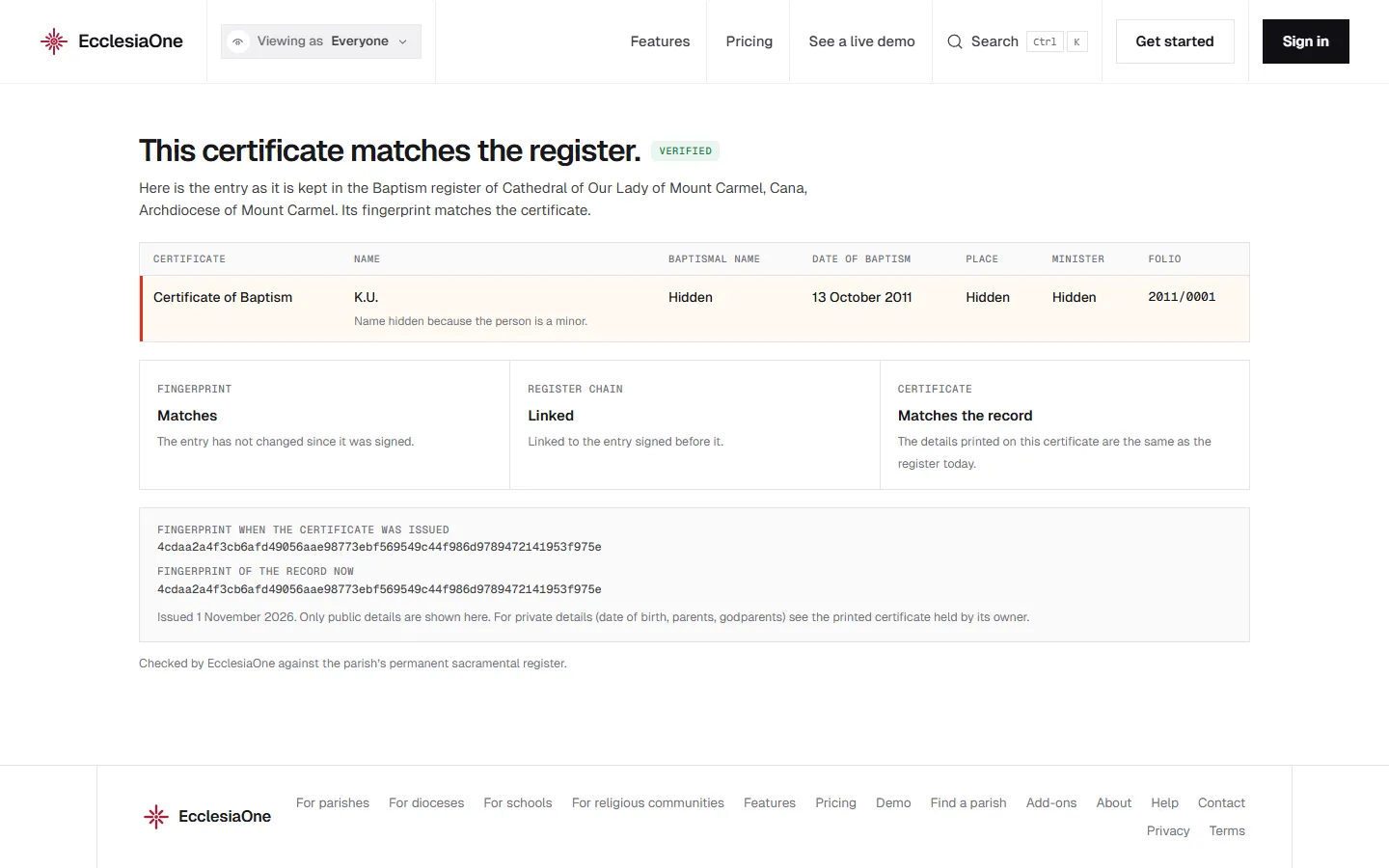
 Anselm's console · sample data
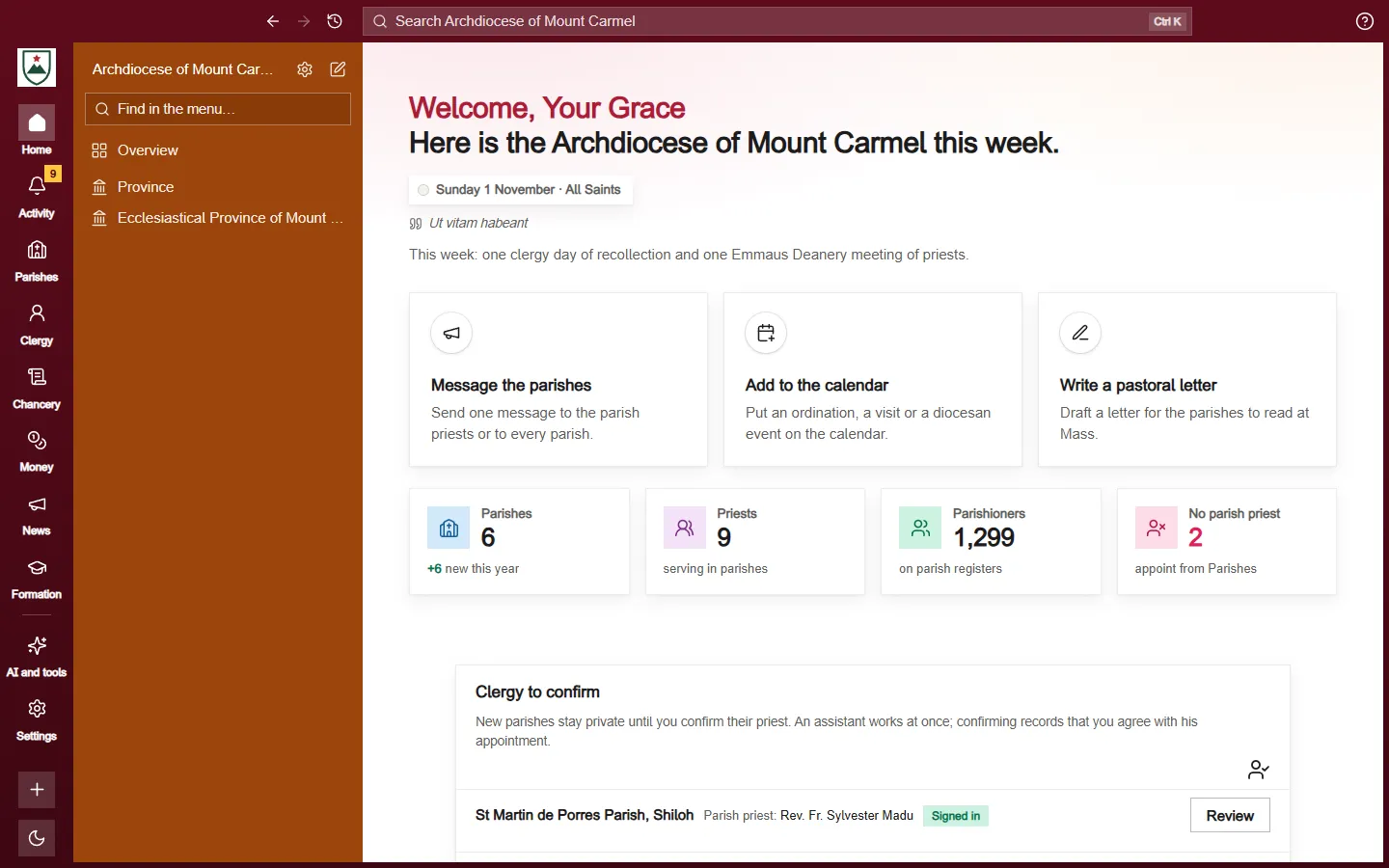
 Dominic's console · sample data
Why roles matter
Everyone on a parish or diocese staff has a role. Your role decides which parts of the console you can open and what you can change there. If something you expect is missing from your menu, check your role first.
The Staff page has a Roles tab. It lists every role in one sentence, what it can and can't do, and who holds it in your parish or diocese. When you invite someone, you see what each role can and can't see before you choose.
Parish roles
Parish priest. Leads the parish. He opens every part of the console, signs the registers, approves money and gives staff their roles. The Bishop or Archbishop appoints him, and a parish has one parish priest. He's never picked from the staff list: to change him, the parish is handed over (see below).
Administrator (vacant parish). Leads a parish that has no parish priest, with all of the parish priest's rights, until a new one is appointed. The diocese names him.
Assistant parish priest. Helps the parish priest: keeps and signs the registers, takes Mass intentions and sick calls, and records money. Where the diocese is on EcclesiaOne, the chancery confirms him first. Sees parishioners, registers, money, Mass intentions, sick calls and the audit log. Doesn't see children's classes, the website, staff or parish settings.
Deacon. Prepares Baptism, Marriage and funeral entries for the priest to sign, issues certificates, takes Mass intentions and sick calls, and sees the books. Doesn't see children's classes, the website, staff, parish settings or the audit log.
Parish administrator. Runs the parish office for the priest: parishioners, register drafts, Mass intentions, the website, staff invitations and parish settings. Doesn't sign records or approve money. Apart from the parish priest, the only role that can download the parishioner list.
Parish secretary. Keeps the parishioner records and the register drafts, takes Mass intentions, updates the website and records money for the treasurer to approve. Doesn't sign records. Doesn't see children's classes, sick calls, staff, parish settings or the audit log.
Parish treasurer. Keeps the parish books: records and approves money, matches the bank statement and closes each month. Sees the parishioner list. Doesn't see the registers, children's classes, Mass intentions, sick calls, the website, staff, parish settings or the audit log.
Finance council member. Reads the books and the statements and signs them as reviewed. Changes nothing and sees nothing else.
Head teacher. Runs every class with the parish priest: the classes, sign-up and the teachers. Sees no parishioner records or money. Only the parish priest gives this role.
Teacher. Teaches the classes the priest or the head teacher gives them, and sends class news to the parish priest. Sees no parishioner records or money.
Parishioner. A registered parishioner. Sees only their own and their household's records, in the parishioner area. Parishioners can claim their record, look up their sacraments, give online and read the parish news.
Diocese roles
The Bishop or Archbishop. Governs the diocese: appoints parish priests and the curia, signs decrees and writes to every parish.
Coadjutor and auxiliary bishops. Help the diocesan bishop, with the vicar general's powers by office.
Vicar general and episcopal vicar. Hold the powers of governance across the diocese, or, for an episcopal vicar, for the area or kind of affairs he's named for: decrees and acts, the parish returns, and moves of clergy and parishioners.
Chancellor. Keeps the records and acts of the diocese: drafts decrees, reads the parish returns and the clergy list, and writes to parishes.
Judicial vicar. Leads the tribunal: reads the sacramental records a case needs, and the audit log.
Finance director. Keeps the books of the diocese: records and approves money.
Communications director. Writes and sends the diocese's letters and notices to parishes, clergy and staff.
Safeguarding officer. Looks after the safety of children and vulnerable adults, and reads the audit log.
Vocations director. Answers people who ask about the priesthood or religious life, and keeps the vocations register.
Secretary to the Bishop or Archbishop. Keeps his diary and letters.
No diocesan role opens a parish's parishioner records or registers on its own. The diocese sees them only during a visitation, and everything the visitor opens is logged and shown to the parish priest.
Giving, changing and ending a role
Only the parish priest changes or removes a staff member's role at his parish. Every change asks first, names the person and the role, and says what they gain and lose. Right after a change or a removal, you can press Undo for a few seconds.
The parish priest's own role never changes from the staff list. To pass the parish to another priest, he opens Hand over the parish on the Staff page, chooses the assistant parish priest who takes it, and types the parish name to confirm. Where the diocese governs on EcclesiaOne, this sends a request to the Bishop or Archbishop, and the parish priest stays in place until he acts.
An assistant parish priest's access is ended with a reason, and the diocese is told.
Children's records and downloads
A child's record (under 18) says so at the top and lists the parents or guardians from the household. The child's own phone and email aren't shown, and no claim link can be made for a child.
Downloading the parishioner list is for the parish priest and the parish administrator. Children are left out unless you tick "Include children" and give a reason. Every download goes in the audit log.
Holding more than one role
You can hold more than one role. A parish priest who's also chancellor of the diocese has both, and the console follows whichever fits the page you're on. If you look after more than one parish, the parish list in the side menu moves you between them. It only lists parishes where you hold a role.
When the console looks empty
If you signed up but the console is mostly empty, your account may not be linked to a parish or diocese yet. Check you signed in with the email you signed up with, or write to support. A brand-new parish has no records yet, so the console fills up as you and your staff use it.